As of 2026-05-13 UTC, the obvious shock is already on the tape. April CPI came in hot at 0.6% month over month and 3.8% year over year, with core CPI at 0.4% on the month and 2.8% on the year.[2] One day later, April PPI added a second layer of pressure: final demand rose 1.4% in the month and 6.0% over 12 months, with services up 1.2% and goods up 2.0%.[3] Treasury's own yield table shows the immediate rates response. On May 12, the 2-year closed at 4.00%, the 10-year at 4.46%, and the 30-year at 5.03%, up from 3.95%, 4.42%, and 4.98% one day earlier.[4]
That part is priced. The narrower new question is what April retail sales does to the interpretation. If spending still looks firm after a 115,000 payroll gain and 4.3% unemployment in April, then the rates move stops looking like a gasoline-and-shelter panic and starts looking like a broader nominal-demand problem.[1][5] If retail sales cool materially, the bond market may decide it overpaid for one ugly inflation burst while Treasury supply itself remains relatively well-behaved.[4][6]
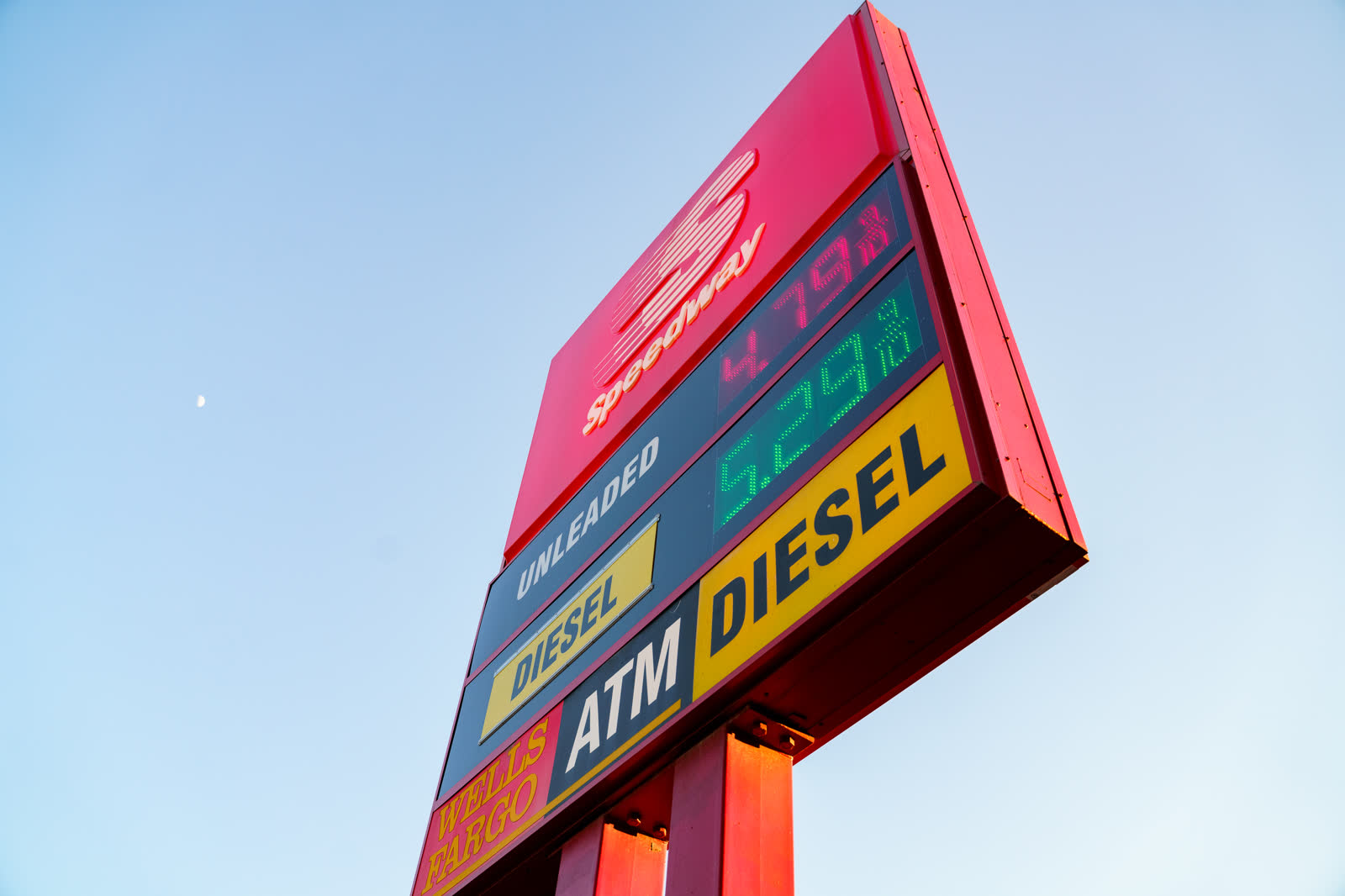
Image context: the cover uses a real Wikimedia Commons photograph of a Minneapolis gas-price sign, not a chart, a skyline, or a generic trader image.[7] That is the right visual scale for this wrap because one of the cleanest questions in this week’s macro tape is whether visible fuel-price pressure is the story, or only the front edge of a wider demand signal.
What the market just learned
The CPI release was not merely a small upside miss. BLS said the energy index rose 3.8% in April, accounting for more than forty percent of the monthly all-items increase, while shelter also rose 0.6%.[2] Gasoline was especially loud: the CPI table shows gasoline up 5.4% in April and 28.4% over 12 months.[2] That is why the hot print felt visible rather than statistical. This was not a story of one obscure medical or communications subcomponent tilting the aggregate. Energy landed right on the dashboard.
PPI then made it harder to dismiss the move as a clean one-off. BLS reported 1.4% monthly final-demand inflation in April, the biggest increase since March 2022, and said almost 60% of that monthly rise could be traced to a 1.2% advance in final-demand services.[3] Goods were also hot at 2.0% in the month.[3] The market now has two back-to-back messages from the price system: headline consumer inflation re-accelerated, and producer-side pressure did not offset it.
The Treasury tape reacted accordingly, but not explosively. The curve cheapened rather than broke. Treasury's daily yield table shows the 10-year moving from 4.42% on May 11 to 4.46% on May 12, while the 30-year moved from 4.98% to 5.03%.[4] Those are meaningful shifts, but they do not yet look like a new disorderly duration event. That matters because Treasury's May 6 refunding statement had already kept nominal coupon and FRN auction sizes steady for the next several quarters, with the current refunding package set at $42 billion for the 10-year and $25 billion for the 30-year.[6] Supply is still present. It is simply not the freshest explanation for every basis point higher.
Why retail sales now owns the interpretation
Retail sales matter here because the growth side of the data has not fully cracked. BLS's April employment report said payrolls rose 115,000, unemployment stayed at 4.3%, average hourly earnings rose 0.2% in the month and 3.6% over the year, and the average workweek held at 34.3 hours.[1] That is softer labor momentum than a rates bear would ideally want, but it is not weak enough to guarantee a fast disinflation path on its own.
Census then adds the demand bridge. The latest advance retail report says March 2026 retail and food-services sales were $752.1 billion, up 1.7% from February and 4.0% from a year earlier, and it schedules the April 2026 release for May 14 at 8:30 a.m. EDT.[5] If April spending comes in firm again, the inflation story broadens. The market can then say: labor is cooling only gradually, consumers are still transacting at scale, and hot CPI plus hot PPI were not just an energy headline.
If retail sales disappoint, the reading changes. A soft April spending print would not erase 0.6% CPI or 1.4% PPI.[2][3] It would, however, narrow the mechanism. The bond market would have to ask whether it treated an energy-and-shelter burst as if it were a full reacceleration in end demand, even while Treasury supply plans remained broadly stable.[4][6]
Five numeric anchors
- Labor base: April payrolls rose 115,000 and unemployment stayed at 4.3%.[1]
- Consumer inflation shock: April CPI rose 0.6% month over month and 3.8% year over year; core CPI rose 0.4% and 2.8%.[2]
- Energy visibility: CPI energy rose 3.8% in April, shelter rose 0.6%, and gasoline rose 5.4% in the month.[2]
- Producer follow-through: April PPI rose 1.4% on the month and 6.0% on the year, with services up 1.2% and goods up 2.0%.[3]
- Rates reaction: Treasury's daily table moved from 3.95% / 4.42% / 4.98% on May 11 to 4.00% / 4.46% / 5.03% on May 12 for the 2-year / 10-year / 30-year.[4]
Those anchors describe a market that has already repriced the inflation shock but has not yet settled the mechanism behind it.
Strongest counterweight
The strongest pushback is that retail sales may already matter less than this framework implies. Once CPI is 0.6%, PPI is 1.4%, gasoline is up 5.4% in the CPI table, and the long bond is back above 5.00%, the market may not need one more demand confirmation to keep term yields elevated.[2][3][4] In that reading, the inflation signal is already broad enough, and April spending only changes the narrative texture, not the direction.
That objection has force. The narrower claim here is not that retail sales is the only important release left. It is that retail sales is the cleanest next test of whether the rates selloff should keep being read as a demand story rather than only as a visible energy-and-shelter shock layered onto a still-stable issuance profile.[4][5][6]
Falsifier
This market-wrap view is wrong if April retail sales come in soft and yields still reprice materially higher anyway.[5] In that branch, the market would be telling you that inflation pressure itself, not demand confirmation, is enough to keep pushing duration lower in price.
Watchlist
- 2026-05-14, 8:30 a.m. EDT: April advance retail sales. This is the next clean test of whether demand kept pace with the inflation shock.[5]
- 2026-05-15: refunding settlement. The current 3-year, 10-year, and 30-year package settles then, which helps show whether supply digestion remains orderly.[6]
- 2026-06-05, 8:30 a.m. ET: May Employment Situation. If labor weakens materially next month, the current inflation scare will sit on a softer growth base.[1]
- 2026-06-10, 8:30 a.m. ET: May CPI. A second hot CPI would make it much harder to keep calling April a contained burst.[2]
Takeaway
The hot inflation prints are already priced. The more interesting question now is what kind of inflation scare this is. If retail sales stays firm, the market can fairly say the problem is broader nominal demand and keep rates higher for longer. If spending cools, then April may look more like an energy-and-shelter jolt that the curve reacted to quickly while Treasury supply itself stayed comparatively boring.[4][5][6]
Sources
- U.S. Bureau of Labor Statistics, "The Employment Situation -- April 2026" (released May 8, 2026) - payrolls, unemployment, hourly earnings, workweek, and next release date.
- U.S. Bureau of Labor Statistics, "Consumer Price Index News Release - April 2026" (released May 12, 2026) - headline CPI, core CPI, energy, shelter, and gasoline details.
- U.S. Bureau of Labor Statistics, "Producer Price Index News Release - April 2026" (released May 13, 2026) - final-demand PPI, services, and goods figures.
- U.S. Department of the Treasury, "Daily Treasury Par Yield Curve Rates" (2026 table) - May 11 and May 12 constant-maturity yields for the 2-year, 10-year, and 30-year.
- U.S. Census Bureau, "Advance Monthly Sales for Retail and Food Services, March 2026" (April 21, 2026) - March sales level, month-over-month and year-over-year growth, and the May 14 release date for April sales.
- U.S. Department of the Treasury, "Quarterly Refunding Statement of Deputy Assistant Secretary for Federal Finance Brian Smith" (May 6, 2026) - current refunding sizes, settlement timing, and the expectation of steady nominal coupon and FRN auction sizes.
- Wikimedia Commons, "File:Speedway Gas Sign (52135392387).jpg" - source page for the Minneapolis gas-price-sign photograph used as the article image.