The market keeps trying to tell a simple easing story: the Fed has moved off the peak, Treasury yields are lower than the 2024 highs, and financing conditions should therefore feel less punishing across the economy. For small businesses, that shortcut still misses the instrument that matters. A large share of Main Street borrowing does not clear off the 10-year Treasury. It clears off prime-linked bank formulas, SBA spread rules, and underwriting standards that reopen more slowly than public markets reprice.[1][2][3][4]
That is the priced-vs-new gap. Priced: rate-sensitive assets and macro narratives have already adjusted to a gentler policy path. New: the bank prime rate is still 6.75%, the latest Fed measure of small-firm loan standards is still in net-tightening territory at 8.9%, and the SBA's own variable-rate framework still allows smaller loans to print at rates that begin with a double-digit handle when prime stays where it is.[2][3][4]
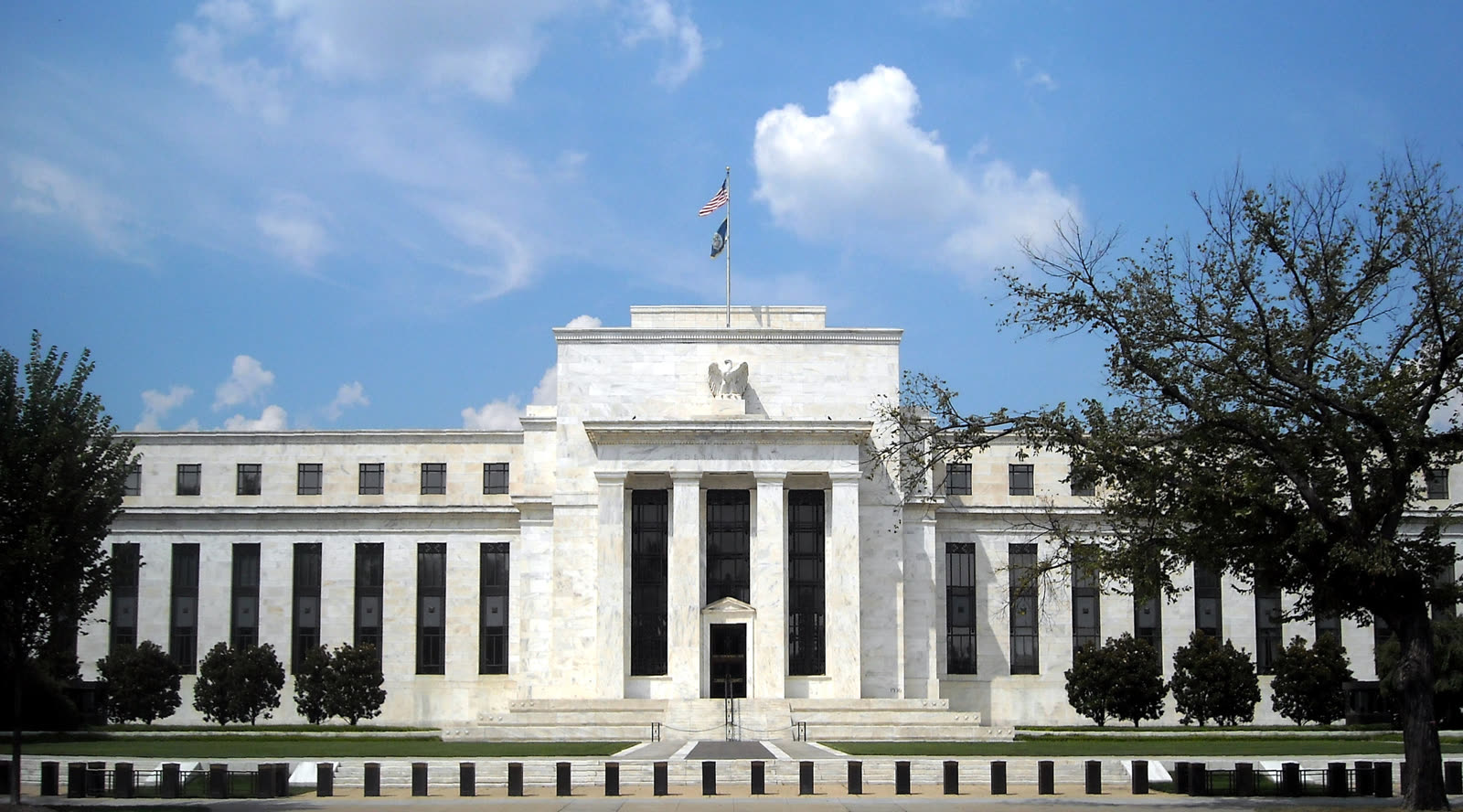
Image context: the cover shows the Marriner S. Eccles Federal Reserve Board Building in Washington, a useful physical anchor for the policy side of the small-business credit chain.[9]
Mechanism: why relief lags the market headline
First, policy reaches many small firms through prime before it reaches them through duration. The effective federal funds rate was 3.64% on 2026-03-26, while the bank prime loan rate was 6.75% as of 2026-02-01.[1][2] That is a gap of about 311 basis points. If your working-capital line or floating-rate business loan is quoted off prime, the relevant question is not whether the 10-year rallied. The relevant question is whether prime has actually moved down far enough to change the monthly cash burden.
Second, the SBA structure preserves a wide spread layer even after policy eases. The agency's current 7(a) table allows maximum variable rates of base rate + 3.0% for loans above $350,000, +4.5% for $250,001 to $350,000, +6.0% for $50,001 to $250,000, and +6.5% for $50,000 or less.[4] At a 6.75% prime rate, that implies ceilings of 9.75%, 11.25%, 12.75%, and 13.25%. Those are caps, not average print levels, but they define the rate territory lenders are still legally able to occupy. The difference between "the Fed is easing" and "small-business credit is cheap again" remains very large.
Third, bank credit boxes are still only partly open. The latest Fed series on domestic banks tightening standards for commercial and industrial loans to small firms registered 8.9% in Q1 2026.[3] That is far below crisis-style tightening, but it is still above zero, which means more banks were tightening than easing. A small business owner trying to renew a revolver or finance inventory does not only face a level of rates. They face a yes-or-no committee process that still has a defensive tilt.
Fourth, actual new-loan pricing confirms that the channel is functioning, but not loose. The Kansas City Fed's Small Business Lending Survey reported that variable rates offered on new lines of credit in Q3 2025 fell to 7.9% at urban banks and 7.6% at rural banks, while surveyed banks still reported more than $66 billion in small-business loans and a 13.4% year-over-year increase in loan volume.[5] That is the right way to read the current regime: credit is available, yet it is still expensive enough that the easing cycle does not feel like a clean reset on the ground.
Six numeric anchors for the current regime
- Effective fed funds: 3.64% on 2026-03-26.[1]
- Prime rate: 6.75% on 2026-02-01, or about 311 bps above fed funds.[2]
- Small-firm C&I standards: 8.9% net tightening in Q1 2026.[3]
- SBA 7(a) max variable rate for loans above $350,000: 9.75% at today's prime.[4]
- SBA 7(a) max variable rate for loans of $50,000 or less: 13.25% at today's prime.[4]
- KC Fed new variable line rates: 7.9% at urban banks and 7.6% at rural banks in Q3 2025.[5]
Those numbers are enough to constrain the argument. Lower policy rates help, but the transmission chain still contains a thick prime spread, a bank-risk layer, and a product-design layer that slows pass-through for smaller borrowers.
Why this matters for markets
The first implication is macro. Public markets can celebrate easier financial conditions while small employers still experience financing as restrictive. That gap matters because small firms sit close to hiring, inventory turns, and local capex decisions. A broad easing story can therefore arrive in asset prices before it arrives in payroll behavior.
The second implication is sectoral. Investors often treat regional banks, business-development narratives, and rate-sensitive small-cap cyclicals as automatic beneficiaries of an easier Fed. That can be directionally right and still early. If standards stay tight and prime-linked borrowing costs remain high, margin relief for small borrowers lags the market's first move.
The third implication is analytical. The right comparison for many small-business borrowers is not "fed funds versus the 10-year." It is "prime plus spread versus cash-flow resilience." That is a much harsher test.
Strongest counterweight
The strongest counterweight is that prime-linked credit can reprice faster than mortgage credit once the policy path and credit quality cooperate. Prime usually follows the target range more directly than long-duration lending rates do. If inflation keeps cooling, the Fed cuts again, and bank credit performance stabilizes, small-business borrowing costs can improve faster than this article's cautious tone implies.[1][2][7]
Falsifier
This thesis fails if three things happen together over the next quarter: (1) prime moves materially lower, (2) small-firm standards move through zero into net easing, and (3) new small-business variable loan rates move down from the high-7% area toward the mid-6% area without a collapse in loan volumes. If that combination appears, the transmission blockage is clearing much faster than this framework assumes.[2][3][5]
Watchlist
- 2026-04-10 CPI release: inflation direction still sets the boundary for how much additional policy relief prime-linked borrowers can realistically expect.[6]
- 2026-04-28 to 2026-04-29 FOMC meeting: this is the next major policy checkpoint for the base rate under prime-linked business credit.[7]
- 2026-05-04 SLOOS release: this is the cleanest official test of whether small-firm credit standards are still merely "less tight" or have finally turned easier.[8]
Takeaway
In 2026, small-business borrowing relief is a transmission story, not a slogan. Treasury yields can fall, credit spreads can tighten, and equity markets can celebrate softer policy. For many firms, the real turn still comes later, when prime falls enough, bank standards reopen enough, and the quoted line-of-credit rate finally stops looking like late-cycle money.
Sources
- Board of Governors of the Federal Reserve System (US), "Effective Federal Funds Rate (DFF)." FRED, updated March 27, 2026.
- Board of Governors of the Federal Reserve System (US), "Bank Prime Loan Rate (MPRIME)." FRED, updated March 2, 2026.
- Board of Governors of the Federal Reserve System (US), "Net Percentage of Domestic Banks Tightening Standards for Commercial and Industrial Loans to Small Firms (DRTSCIS)." FRED, updated February 3, 2026.
- U.S. Small Business Administration, "7(a) loan program: terms, conditions, and eligibility."
- Federal Reserve Bank of Kansas City, "Small Business Lending Continues to Increase" (Small Business Lending Survey, December 18, 2025).
- U.S. Bureau of Labor Statistics, "Consumer Price Index Release Schedule."
- Federal Reserve Board, "FOMC Meeting Calendars and Information."
- Federal Reserve Board, "Calendar: May 2026."
- Wikimedia Commons, "File:Marriner S. Eccles Federal Reserve Board Building.jpg."