A tighter high-yield spread is easy to misread as a universal easing signal. In 2026, that shortcut is still too blunt. Public credit and bank credit do not clear on the same clock, and the gap matters for how quickly easier market pricing reaches the real economy.[1][2][3][4]
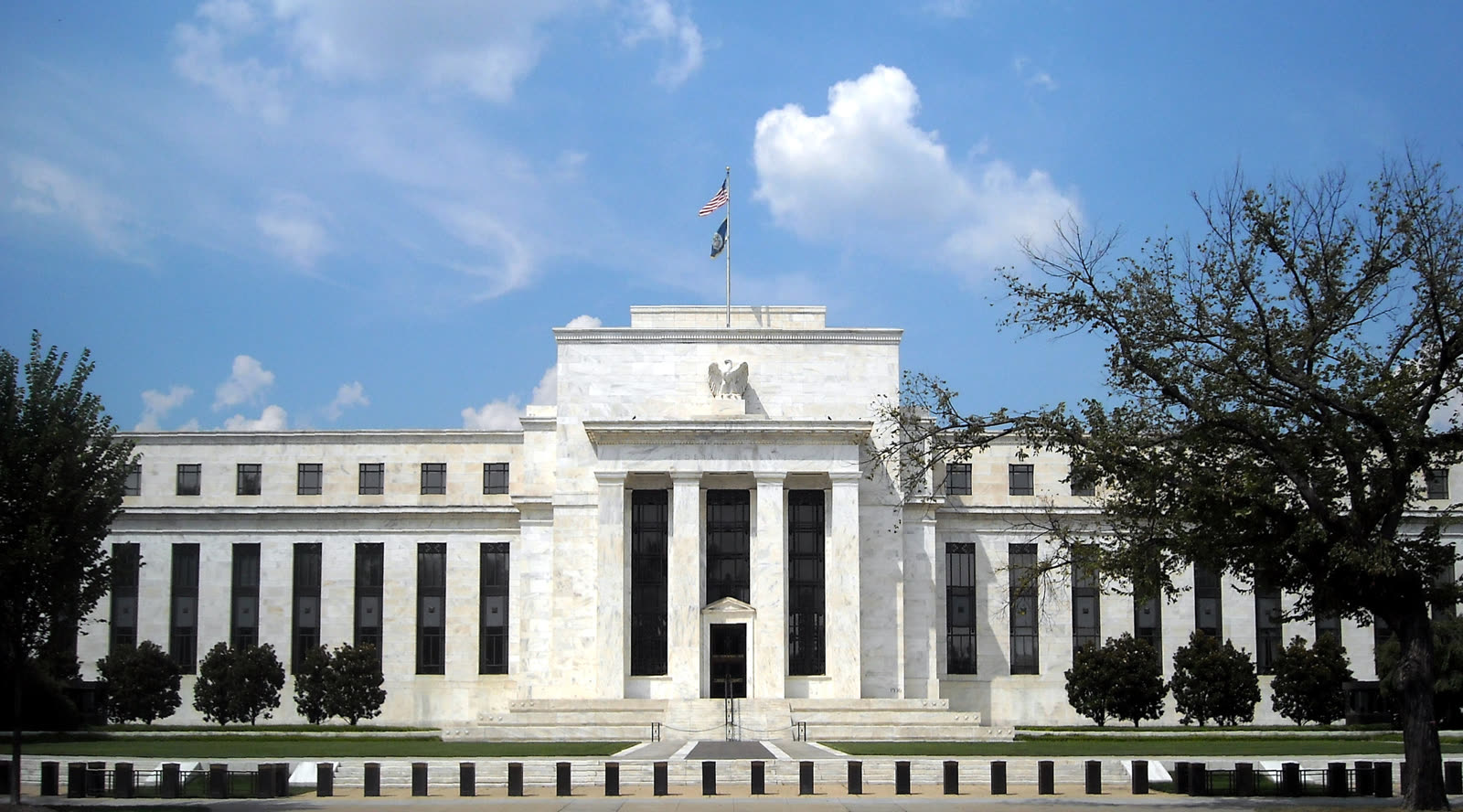
Image context: the cover shows the Marriner S. Eccles Federal Reserve Board Building in Washington, a physical anchor for the policy side of the credit-transmission chain.[10]
Priced vs new
Priced: by early March, public-credit markets were no longer behaving as if a funding accident or deep recession was imminent. The ICE BofA US High Yield OAS sat at 3.06% on 2026-03-10, and the 2-year Treasury yield was 3.57% the same day.[3][4]
New: the bank channel was still only partly open. The Fed's latest net-tightening measure for commercial and industrial loans to large and middle-market firms was 5.3% in Q1 2026. That is far below the 18.5% reading from Q2 2025, but it is still above zero, which means more banks were tightening than easing.[1] At the same time, commercial and industrial loans outstanding rose to $2.790 trillion in 2026-02-01 from $2.707 trillion in 2025-12-01.[2]
The right reading is not "one market is wrong." The right reading is that one market moves faster.
Mechanism: why bank credit lags the bond rally
First, bond investors reprice macro path and default risk faster than banks rewrite underwriting behavior. A tighter high-yield spread tells you capital markets are demanding less compensation for owning risky paper. It does not tell you loan committees have decided to extend materially easier terms to middle-market borrowers the same week.[3][4]
Second, less tightening is not the same thing as easing. The SLOOS data are useful precisely because they preserve that distinction. A reading of 5.3% is a long way from the restrictive pulses seen in 2024 and mid-2025, but it still means the median business borrower is dealing with a banking system that has not fully switched from defense to expansion.[1][5]
Third, outstanding loan balances do not map one-for-one to fresh risk appetite. C&I loans did rise by roughly $83.2 billion between December 2025 and February 2026, but aggregate balances mix new origination, revolver usage, seasonal cash needs, and repayments. That is why the H.8 release matters more than one headline balance number: it lets you test whether balance-sheet credit is broadening or merely drifting higher around existing client needs.[2][6]
Fourth, policy transmission reaches bond markets before it reaches internal bank constraints. Treasury yields react continuously to growth, inflation, and Fed expectations. Banks also care about deposit competition, capital usage, portfolio mix, examiner posture, and what recent credit performance is doing to internal risk tolerance. Those frictions are why public spreads can look friendly while private credit allocation still feels selective on the ground.[4][5][6]
Five numeric anchors for the current regime
- Net tightening on large and middle-market C&I standards: 5.3% in Q1 2026.[1]
- Same measure in Q2 2025: 18.5%.[1]
- Commercial and industrial loans outstanding: $2.790 trillion in 2026-02-01.[2]
- Two-month change in C&I loans outstanding: about +$83.2 billion versus 2025-12-01.[2]
- Public-market pricing anchors on 2026-03-10: 3.06% high-yield OAS and 3.57% 2-year Treasury yield.[3][4]
Read together, those numbers describe a credit system that is healing, but not synchronized. Market-implied stress compensation has eased faster than bank-credit supply has normalized.
Strongest counterweight
The strongest counterweight is that banks may be closer to re-opening than this framework assumes. If tighter spreads hold, funding stays orderly, and economic data avoid a fresh slowdown scare, a 5.3% net-tightening reading can roll through zero quickly. In that version of events, the current lag is only a temporary sequencing issue rather than a binding macro constraint.[1][3][4]
Falsifier
This thesis fails if three things happen together over the next quarter: (1) SLOOS business-loan standards move decisively into net easing, (2) H.8 loan balances continue to rise in a way that looks broad rather than seasonal, and (3) high-yield spreads stay tight without a concurrent deterioration in growth data. If all three occur at once, the transmission gap is closing faster than this article argues.[1][2][3][6]
Watchlist
- 2026-04-10 CPI release: inflation direction still sets the boundary for how much front-end relief the market can sustainably price.[7]
- 2026-04-28 to 2026-04-29 FOMC meeting: policy communication matters because the bank channel usually needs a calmer rate path before underwriting behavior turns friendlier.[9]
- 2026-05-01 and 2026-05-08 H.8 releases: these weekly reports are the fastest official read on whether bank balance sheets are actually carrying more business credit.[8]
- 2026-05-04 SLOOS release: this is the cleanest official test of whether "less tight" has finally become "easier."[8]
Takeaway
In 2026, tighter bond spreads are a necessary part of easier credit, but they are not the whole thing. Public markets can relax before banks do. Until loan standards, loan growth, and market pricing all point in the same direction, the safer macro read is partial transmission, not full reopening.
Sources
- Board of Governors of the Federal Reserve System (US), "Net Percentage of Domestic Banks Tightening Standards for Commercial and Industrial Loans to Large and Middle-Market Firms (DRTSCILM)." FRED, updated February 3, 2026.
- Board of Governors of the Federal Reserve System (US), "Commercial and Industrial Loans, All Commercial Banks (BUSLOANS)." FRED, updated March 20, 2026.
- Ice Data Indices, LLC, "ICE BofA US High Yield Index Option-Adjusted Spread (BAMLH0A0HYM2)." FRED, updated March 11, 2026.
- Board of Governors of the Federal Reserve System (US), "Market Yield on U.S. Treasury Securities at 2-Year Constant Maturity, Quoted on an Investment Basis (DGS2)." FRED, updated March 11, 2026.
- Federal Reserve Board, "The January 2026 Senior Loan Officer Opinion Survey on Bank Lending Practices."
- Federal Reserve Board, "H.8 Assets and Liabilities of Commercial Banks in the United States."
- U.S. Bureau of Labor Statistics, "Consumer Price Index Release Schedule."
- Federal Reserve Board, "Calendar: May 2026" (statistical release dates for H.8 and SLOOS).
- Federal Reserve Board, "FOMC Meeting Calendars and Information."
- Wikimedia Commons, "File:Marriner S. Eccles Federal Reserve Board Building.jpg."