Some ships paid more than $1 million apiece for a Panama Canal slot in the spring of 2026. A winning bid tells us what one operator would spend to keep a particular transit date. Applying it to the next ship through the locks would make a poor freight estimate. [1]
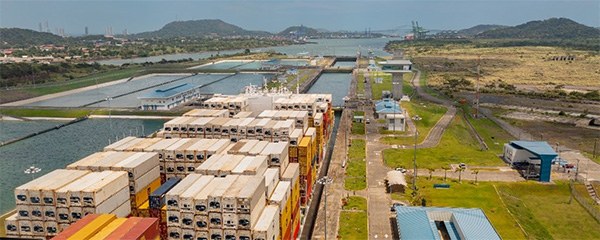
Consider two ships bound for the same ocean. A container line can sell space against a published sailing schedule and reserve its canal passage well ahead. A gas carrier can be at sea before a spot sale settles which port it will discharge at. The canal sells both operators a date. By the time the gas carrier needs one, there may be very few dates left that will get the cargo to its buyer on time. The canal authority describes precisely this difference in how liners and spot gas vessels plan their voyages. [2]
What the last buyer can afford
Put yourself at the gas carrier’s chartering desk. If you pass on today’s slot, you can seek a later one. Estimate the extra vessel hire for those days and what it would cost to miss the discharge window. Then price a diversion, including fuel and the hire you would pay on the longer voyage. The cheaper workable alternative sets a ceiling on your bid, after allowing for the ordinary cost of a canal transit. A buyer who agrees to take delivery a few days later can bring that ceiling down before a single extra slot opens.
The authority’s spring briefing gives a sense of the spread. It put the average auction price at $135,000–$140,000 before the Middle East conflict and about $385,000 during March and April. Even that higher average covered a small slice of traffic. The authority said most vessels booked ahead and only three to five slots a day went to auction. An auction winner took an opening already in the schedule. Ships with reservations kept their places. [1]
The cost of buying early
A fleet with repeat cargoes can bid in advance for a package. In its March terms for gas carriers, the authority illustrated the arithmetic with a northbound reservation each month for half a year. At an assumed winning bid of $300,000 per passage, the operator commits $1.8 million. Those are the authority’s example figures. They tell us the size of the commitment a chartering desk has to approve, even though no one knows what the last-minute auction will cost on any of those dates. [3]
It is tempting to compare that example bid with the spring auction average and call the difference a saving. The fleet has to supply a northbound ship in each relevant month to realize the full benefit. A change in where a customer buys its gas can leave the operator holding the wrong direction. For a carrier with uncertain employment, paying dearly on the occasional voyage can cost less across a season than buying a calendar it cannot use.
When a high bid would mean more
Water can change this calculation for regular customers too. In August the authority warned that reduced daily transits could lengthen waits for unbooked ships. It also announced that daily auction slots would be grouped by cargo segment beginning in September. A gas carrier and a dry bulk ship could therefore face different competition on the same waterway. [4]
At the next daily auction, check which cargoes were eligible before comparing its winning bid with an earlier sale. At the next long-term package award, look for gas operators willing to commit to similarly high prices across several months. Finally, read the next watershed advisory for a cut in daily passages that would keep alternatives scarce. Sustained high bids for advance packages as well as last-minute slots would overturn the narrow reading of the spring spike. Carriers with time to plan would then be paying the premium too. [1][3][4]
Sources
- Panama Canal Authority, “Panama Canal Meets Rising Demand,” spring 2026 operating and auction figures.
- Panama Canal Authority, “Panama Canal Readies to Accommodate Peak Season Fluctuations,” booking patterns by vessel type and photograph.
- Panama Canal Authority, Long-Term Slot Allocation 2.5 FAQ, question 8, March 27, 2026.
- Panama Canal Authority, “Panama Canal Adopts Additional Measures to Address Reduced Precipitation in the Canal Watershed,” August 2026.