Priced: Conagra investors already know this is no longer a sleepy packaged-food income story. New: the July 15 fiscal 2026 print has to show whether the freezer case can fund the balance sheet, the brand rebuild, and the dividend at the same time.
The mechanism is tighter than the headline yield suggests. Conagra returned to Q3 organic sales growth, but adjusted earnings still fell, gross margin compressed, and the company ended the quarter with $7.3 billion of net debt at 3.83x net leverage.[1] The market worry is visible in independent dividend coverage: the yield has moved high enough that investors are treating a payout cut as a live possibility rather than a remote tail risk.[3][5]
Scenario 1: Frozen Volume Buys Time
The base case is not heroic. It says the third quarter was an early operating turn, not a final answer. Conagra reported $2.8 billion of Q3 net sales, down 1.9% as reported but up 2.4% organically. The important split was price/mix up 1.9% and volume up 0.5%.[1] That is a small volume turn, but in branded food it matters because the previous inflation playbook depended too heavily on price.
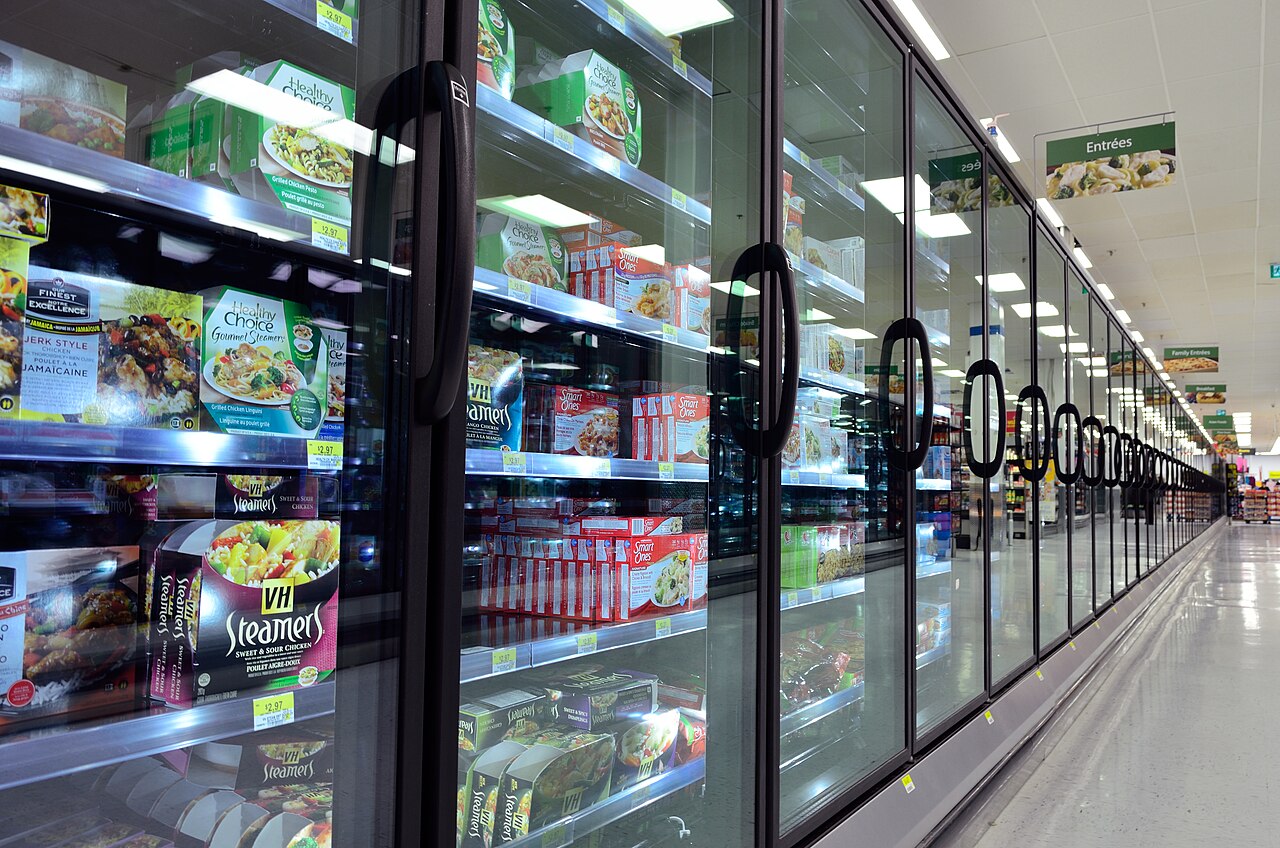
The better signal came from Refrigerated & Frozen. Segment net sales rose 1.6%, organic net sales rose 3.6%, and volume rose 3.9% after last year's supply constraints.[1] That is where the stock debate lives. If frozen single-serve meals, frozen vegetables, handhelds, appetizers, meat snacks, and related freezer-case categories keep taking volume share, Conagra has a plausible way to keep investing behind brands while it works down leverage.
In this branch, July 15 does not need to deliver a miracle. It needs to show that Q3 was not a one-quarter supply normalization bounce. The clean proof would be another quarter in which frozen volume remains positive, price/mix does not turn into discount-heavy promotion, and management can explain where advertising and product investment are producing real shelf velocity rather than only protecting legacy brands.[1]
Scenario 2: Debt And Dividend Force A Reset
The bear case starts with cash math. Through the first three quarters of fiscal 2026, Conagra generated $896 million of operating cash flow, spent $314 million on capital expenditures, and paid $502 million in dividends.[1] Free cash flow was still positive, but the cushion was not wide enough to make the payout irrelevant. It also came in a year when adjusted EPS guidance had narrowed to about $1.70, the low end of the original $1.70 to $1.85 range.[1]
That is why the dividend is more than a shareholder-relations issue. A $0.35 quarterly payout can be defensible if frozen volume, margins, and debt reduction all move in the same direction. It becomes harder to defend if the company needs more advertising, product renovation, trade support, and supply-chain investment just as adjusted earnings are under pressure.
The new CEO timing sharpens the question. Conagra named John Brase president and CEO effective June 1, 2026, after more than three decades in consumer goods and a recent role as president and chief operating officer of J.M. Smucker.[2] A new leader can preserve the payout to signal continuity. He can also use the first major earnings cycle to reset expectations, especially if the board decides that funding brand repair is worth more than defending a yield created by a falling stock.
The Margin Gate
The margin line is the most practical test because volume growth without profit quality does not fix the model. Q3 adjusted gross margin fell to 23.7%, adjusted operating margin was 10.6%, and management still expected fiscal 2026 cost-of-goods inflation of about 7%, including core inflation and gross tariff expense before mitigation.[1]
That combination explains why this is not simply "frozen is improving, buy the stock." Conagra can recover volume and still fail the equity test if the recovery is bought with too much promotion, if input costs remain sticky, or if divestitures remove profit faster than the core portfolio rebuilds it. The Q3 release repeatedly points to M&A and divested-business effects in reported sales and segment profit, which is the right warning: cleaner focus can help, but it does not automatically replace lost earnings.[1]
The constructive version is that the portfolio is finally narrowing around areas where Conagra can matter: frozen meals, snacks, condiments, and brands with enough frequency to justify investment. The skeptical version is that the company is pruning because the old portfolio could not carry its debt, dividend, and growth expectations together.
Counterweight
The strongest pushback is that the market may already be discounting too much damage. Q3 did show organic growth, frozen volume improved, net interest expense fell 7.7%, and net debt was down $818 million from the prior-year period.[1] A company with still-recognizable brands, real freezer-case share gains, and positive free cash flow does not need a perfect consumer backdrop to create upside from low expectations.
There is also a sequencing argument. If Brase uses the July 15 call to keep the dividend while laying out a sharper productivity and brand-investment plan, the stock can trade less like a payout trap and more like a consumer-staples restructuring. The dividend would then become a bridge, not the thesis.
But that only works if investors can see the bridge landing somewhere. A high yield is not a substitute for operating proof. The payout is attractive only if frozen volume and margin recovery make it boring.
Falsifier
The cautious thesis fails if the July 15 report shows that Conagra can fund all three priorities at once: positive frozen volume, improving adjusted margin, and continued deleveraging while keeping the $0.35 quarterly dividend intact.[1][4] In that case, the dividend-reset fear is too severe, and the new CEO has more room than the market assumes.
The thesis is confirmed if management protects the dividend but guides to another year where earnings, advertising needs, and leverage compete for the same dollar. It is also confirmed if frozen volume stays positive but margins keep absorbing the benefit through inflation, promotion, or stranded costs.
Watchlist
First, watch the July 15, 2026 Q4 and full-year release. The key items are frozen volume, adjusted gross margin, adjusted EPS guidance, and any change in dividend language.[4]
Second, watch whether management frames the dividend as a capital-allocation priority or simply says future dividends remain subject to board approval. That distinction will matter more than a single quarter's payout declaration.
Third, watch net leverage versus brand investment. Conagra can cut debt or defend the brands; the rerating case needs evidence it can do both without starving the freezer-case recovery.
Fourth, watch whether the new CEO changes the portfolio language. More divestitures may be rational, but if every sale is needed to hold the payout together, the yield is consuming the turnaround rather than financing patience.
Conagra's July print is therefore not a normal packaged-food update. It is a capital-allocation test disguised as an earnings call. Frozen volume has improved enough to keep the story alive. Now it has to pay for the reset.
Sources
- Conagra Brands via PRNewswire, "Conagra Brands Reports Third Quarter Results" (April 1, 2026) - Q3 sales, organic volume, segment performance, margins, debt, dividend, fiscal 2026 guidance, and inflation assumptions.
- Conagra Brands via PRNewswire, "Conagra Brands Appoints John Brase as President and Chief Executive Officer" (April 13, 2026) - leadership transition timing and Brase background.
- The Motley Fool, "Meet the Highest-Yielding Stock in the S&P 500. Does Its 10.2% Yield Make It Worth Buying?" (June 26, 2026) - independent dividend-risk framing and market expectation context.
- Conagra Brands via PRNewswire, "Conagra Brands to Release Fiscal 2026 Fourth Quarter and Full Year Earnings on July 15, 2026" (June 9, 2026) - date and format of the next results release and investor Q&A.
- MarketBeat, "Conagra Brands Dividend Yield, Date & History" - dividend amount, annualized payout, and yield reference.
- Wikimedia Commons, "File:FrozenFoodSupermarket.jpg" - source page for the Raysonho photograph of a supermarket frozen-food aisle used as the article image.