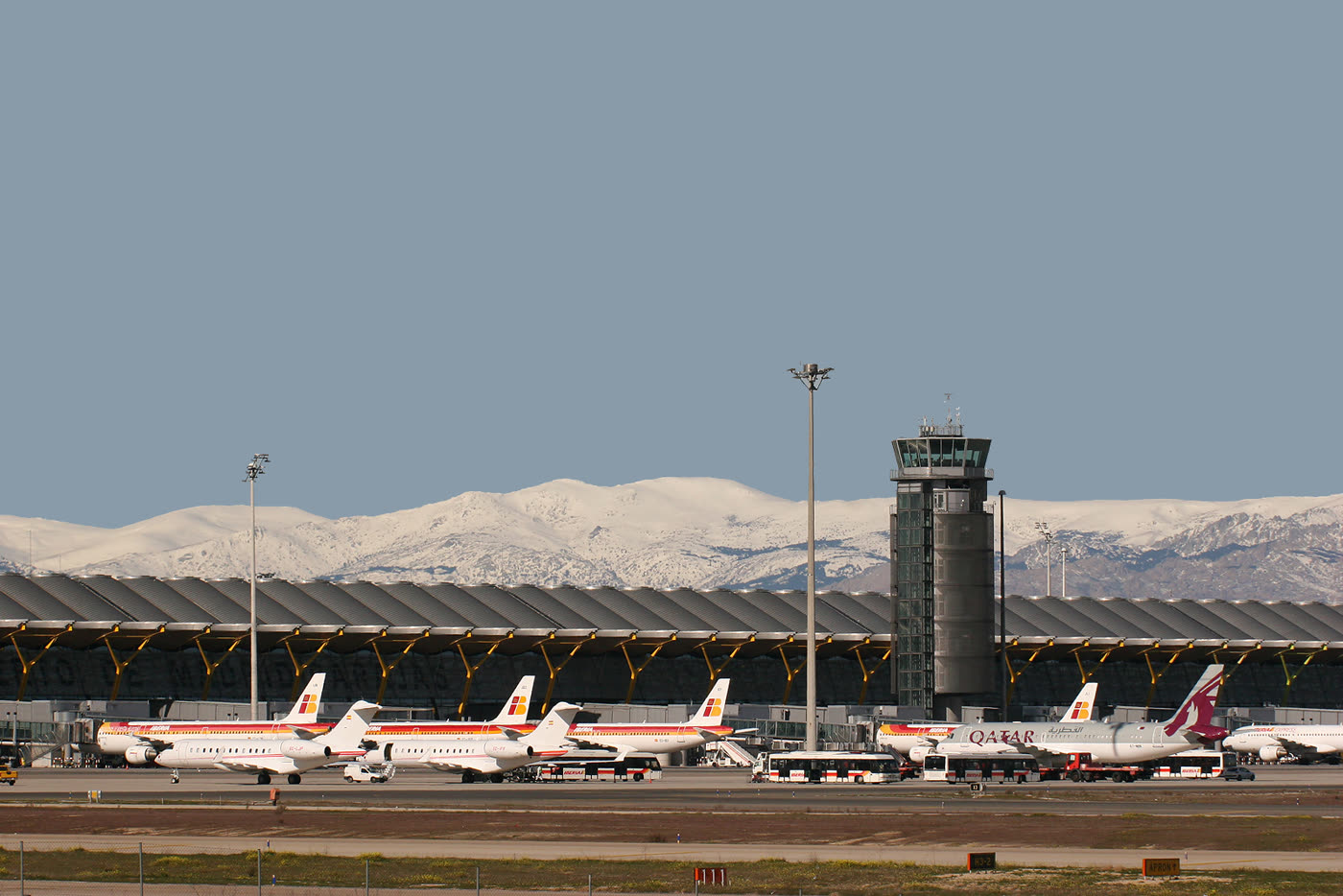
Priced: Aena already looks like a scarce European airport network with traffic above the post-pandemic recovery debate. New: the equity question has moved from "will passengers return?" to "will the next regulated-charge cycle and commercial rent per passenger pay for a heavy capex wave without handing the economics to airlines?"[1][2][3]
That is the right gap to underwrite. Aena's airports are busy, visible, and strategically important, but airports are not pure volume businesses. They are regulated infrastructure platforms where each passenger becomes value only if charges, shops, lounges, parking, cost control, and future investment obligations leave enough cash behind.
The Mechanism
Aena has two linked engines. The first is regulated aeronautical revenue: passengers, movements, security, use of terminals, and other airport services flow through a charge framework. The second is commercial monetisation: retail, food and beverage, VIP services, car parks, car rental, real estate, and minimum annual guaranteed rents. The bull case works when traffic growth fills scarce capacity and lets both engines compound.
The first-quarter tape supported that view. Aena Group handled 81.3 million passengers in Q1 2026, up 3.8% year on year; the Spanish network reached 65.6 million, up 3.2%.[1] Total consolidated revenue rose 11.6% to EUR1.48 billion, while EBITDA rose only 2.7% to EUR661.1 million and the EBITDA margin fell to 44.7% from 48.6% a year earlier.[1] That spread is the story. Demand is not the problem. Conversion is.
Commercial activity is the cleaner upside line. Aena reported commercial and real-estate revenue per passenger of EUR7.4, up 4.6% year on year, with commercial revenue per passenger at EUR6.9.[1] That matters because commercial rent is the part of the airport model that can make passenger growth more than a regulated utility return. If each traveler spends more time, more money, or more rent-backed space inside the terminal, the multiple gets support even when aeronautical charges are negotiated hard.
The Valuation Walkthrough
Start with traffic, then haircut it for regulation. Aena's May release showed Spanish airports at 124.6 million passengers for January-May 2026, up 3.7% year on year, while the whole group reached 150.9 million, up 4.0%.[3] May itself was stronger: Spanish airports handled 30.7 million passengers, up 5.0%.[3]
Those numbers are good, but they are not free. Aena explicitly warned that part of early-2026 traffic came from temporary factors: extra summer scheduling linked to the Middle East conflict and a shift from rail after Spain's January 18 train accident.[3] The valuation model should therefore avoid capitalizing every monthly growth point as structural demand.
The next layer is DORA Three, the 2027-2031 airport-regulation proposal. Aena is asking for EUR9.991 billion of regulated investment inside a EUR12.888 billion total five-year investment plan, with an estimated 1.690 billion passengers across the DORA period.[2] The regulated capex is the right reason to own the asset if it expands Madrid, Barcelona, and the wider network before capacity becomes the binding constraint. It is also the reason free cash flow can lag the passenger narrative.
The charge path is the valuation fulcrum. Aena's proposal uses a 2026 maximum annual revenue per passenger base of EUR10.52, then moves IMAP to EUR10.92 in 2027 and EUR12.69 in 2031, implying annual increases from EUR0.40 to EUR0.47 per passenger.[2] In plain terms, the company is asking investors and regulators to accept a modest passenger-charge step-up in exchange for a large investment cycle.
That is why the stock should not be valued as a simple travel-recovery play. If the final framework preserves most of that charge path while traffic and commercial rent per passenger keep growing, Aena can look like a scarce capacity owner. If the final framework lowers the allowed revenue path but keeps the investment obligation, the same traffic growth can become a funding burden.
The Counterweight
The strongest bear case comes from the customer, not the passenger. IATA and Spain's airline association argued in February that Spanish airport charges should fall by 4.9% annually through 2031, equivalent to a large cumulative reduction, while still preserving room for investment.[4] Their claim is simple: if Aena has underestimated traffic growth, then more passengers can cover fixed costs without higher charges.
Aena takes the opposite side in its own public framing: the company says some major airports are close to technical capacity, the investment cycle is needed to keep the network from becoming a mobility bottleneck, and the proposed average annual increase is only 43 cents per passenger.[5] That disagreement is not just lobbying noise. It defines the spread between the equity and the airline P&L.
Investors should treat both arguments as useful. Airlines are economically incentivized to push down airport charges, but they are also the first to see whether demand is strong enough to make the regulated forecast conservative. Airports are economically incentivized to defend returns, but Aena's own Q1 margin drop shows that revenue growth does not automatically become EBITDA margin when operating costs and construction-linked items rise.[1]
Falsifier
The thesis fails if the final DORA Three decision by September 30, 2026 materially cuts the proposed per-passenger charge path or WACC while leaving the capex burden intact, and Aena cannot offset that with sustained commercial revenue per passenger growth. In that case, traffic would still be real, but the incremental passenger would belong more to airlines, contractors, and passengers than to equity holders.
The thesis is confirmed if the final framework preserves most of the allowed-revenue path, Jan-August traffic stays above Aena's conservative 2026 growth assumption without relying only on temporary route shifts, and commercial rent per passenger continues to rise faster than passenger volume.
Watchlist
First, watch the Council of Ministers approval process due no later than September 30, 2026. The key lines are the IMAP path, allowed WACC, regulated OPEX, and whether the EUR9.991 billion regulated capex envelope is meaningfully changed.[2]
Second, watch Aena's June, July, and August traffic releases. Summer strength that keeps Spain above the company's +1.3% 2026 passenger-growth estimate would make the DORA traffic base look conservative; a fade would support the regulator's caution.[2][3]
Third, watch the next 2026 results for EBITDA margin and commercial revenue per passenger. Q1 already showed the difference between strong revenue growth and lower margin conversion.[1]
Fourth, watch airline pushback. If IATA and ALA keep centering the debate on underestimated traffic growth, investors should model a tougher final charge outcome even if monthly passenger data look healthy.[4][5]
Aena still has the right kind of scarcity: airports that matter, traffic that is visible, and commercial space that can earn more per traveler. The multiple, however, belongs to the regulation-and-capex bridge. More passengers are useful only if the allowed-charge framework and terminal economics let Aena keep enough of them.
Sources
- Aena, Consolidated Interim Management Report Q1 2026 (April 29, 2026) - traffic, revenue, commercial revenue per passenger, operating expenses, EBITDA, margin, debt, and DORA update.
- Aena, DORA Proposal 2027-2031 / Inside Information (February 18, 2026) - regulated capex, traffic assumptions, proposed OPEX, WACC, IMAP path, 2026 growth estimate, and approval timing.
- Aena, "Aena Group airports exceed 36 million passengers in May" (June 12, 2026) - May and January-May 2026 passenger, movement, and freight traffic.
- IATA, "Airlines Call for Annual 4.9% Reduction in Spanish Airport Charges" (February 18, 2026) - airline position on Spanish airport charges and traffic assumptions.
- Aena, "Aena proposes 13 billion euros of investment for all airports in its network in Spain and an average annual increase of 43 cents per passenger in airport charges" (February 18, 2026) - public explanation of the capex cycle, capacity rationale, charge proposal, and DORA process.
- Wikimedia Commons, "File:Terminal T-4 Madrid - Barajas Airport (8520153689).jpg" - source page for the Madrid-Barajas Terminal 4 photograph by Magic Aviation.