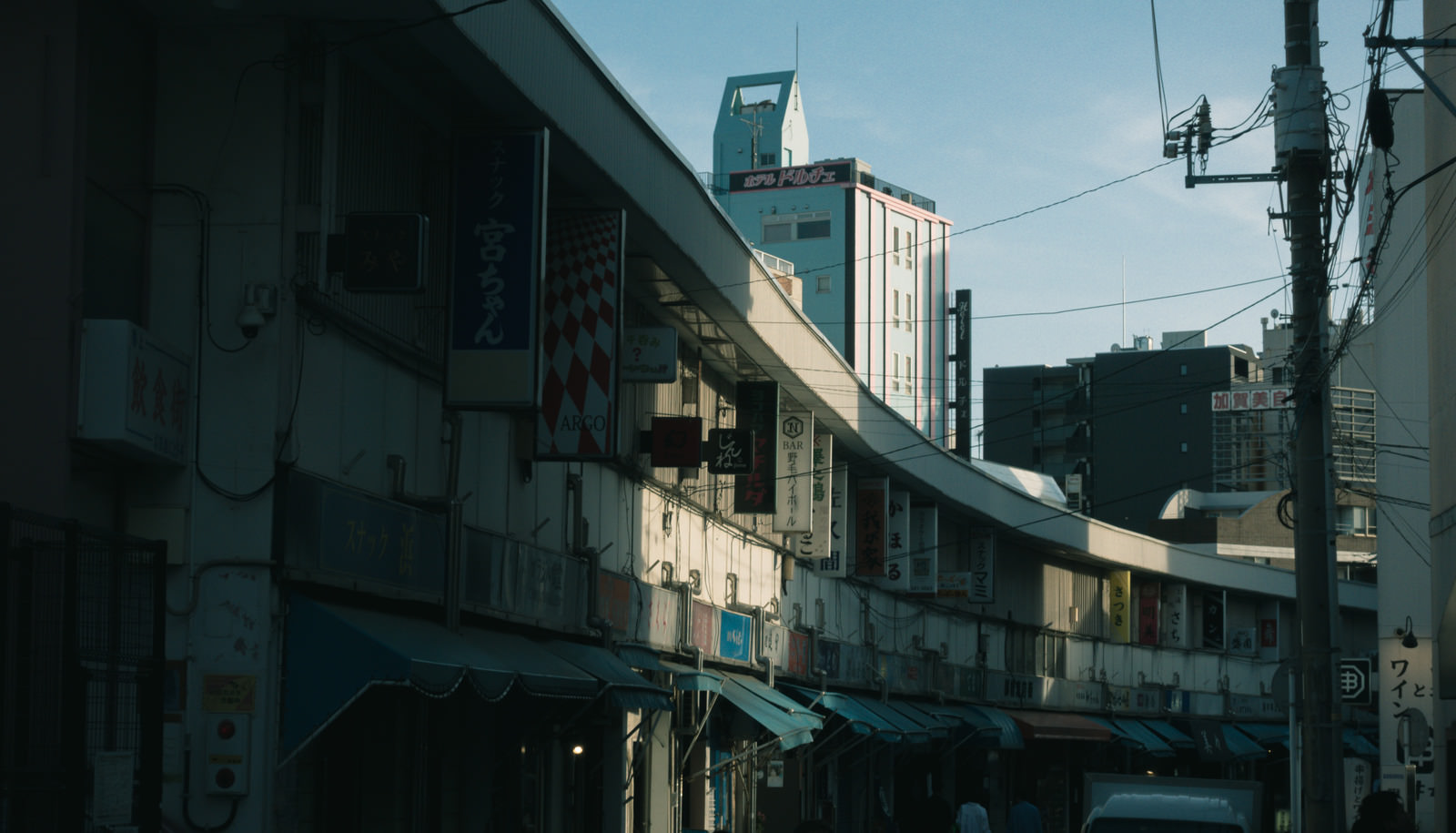
If you only have one Noge night, run it as a two-door sequence instead of random hopping: start at Daiichi-tei (第一亭) near Hinodecho for a fast, high-signal food base, then move into Hoppy Sennin (ホッピー仙人) inside Miyakobashi for the compact late session.[1][2][3][4]
This works because the clocks are complementary. Daiichi-tei runs a dinner window from 16:30–21:00 (and can close early when ingredients run out), while Hoppy Sennin runs a short evening lane with strict capacity and weekday limits depending on source, so your timing precision matters more than distance.[1][2][4]
The two-anchor night shape
- Anchor 1: Daiichi-tei, 1-20 Hinodecho, about 2 minutes from Hinodecho Station.[1][5]
- Anchor 2: Hoppy Sennin, Miyakobashi 2F, with only 8 seats (standing when full).[2]
- Best handoff window: leave Daiichi-tei around 18:20–18:50 and enter Miyakobashi before the post-19:00 compression.[1][2][4]
- Walking logic: both anchors sit inside the same Noge/Hinodecho nightlife pocket; use station exits as your reset points, not map pinball.[1][5][6]
Local moves that change outcomes
- Treat Daiichi-tei as your food anchor, not your linger stop. Its dinner block is finite (16:30–21:00) and the shop notes possible early close when ingredients end, so front-load your core order there.[1]
- Use weekday reservation reality. Daiichi-tei allows reservations on weekdays only; weekend flow is more queue-dependent, so arrive earlier if this is a Friday/Saturday run.[1]
- Order for tempo, not variety. Community patterns on Retty and Tabelog repeatedly center on the same dishes (パタン / チート) for a quick, high-impact first stop—good for a two-door night where pacing matters.[1][3]
- Cap stop one at about 45–70 minutes. If you still sit at Daiichi-tei after 19:00, your risk of missing the tighter second window rises materially.[1][2][4]
- Expect a small-room entry test at Hoppy Sennin. Tabelog lists 8 seats with standing overflow; this is not a place for a large indecisive group.[2]
- Carry cash by default. Both shops list weak/non-card support patterns in local listings; cash removes checkout friction during peak rotation.[1][2][3]
- Plan your station exit before drink two. Noge official access anchors are simple: about 5 min from Sakuragicho/Hinodecho to Miyakobashi, and roughly 10 min to Kannai from the district.[5]
- Set a hard train checkpoint. Ekitan’s current tables show post-midnight departures from Kannai (e.g., around 00:12 northbound and 00:16 southbound on the Blue Line in the sampled timetable), so build a platform margin, not a door margin.[6]
Non-local traplines (and better alternatives)
-
Trap 1: treating Noge as “infinite-hours, decide later.”
Better move: lock the two-door order and time-box each stop. Daiichi-tei’s finite dinner block plus ingredient-risk makes late indecision expensive.[1] -
Trap 2: assuming published Hoppy Sennin hours are uniform everywhere.
Better move: cross-check same-day. The official site presents one schedule pattern (19:00–22:00, Sunday closed), while Tabelog currently shows a tighter operating pattern (18:00–20:00 on specific weekdays) with recent hours edits noted.[2][4] -
Trap 3: arriving as a 4–6 person group expecting immediate seating at anchor two.
Better move: split into pairs or send two in first; local listings and reviews emphasize how quickly the tiny counter saturates.[2][3]
Practical run card
- Country / city: Japan, Yokohama (Noge–Hinodecho pocket)
- Anchor sequence: Daiichi-tei → Hoppy Sennin
- Session clock: start 17:10–17:40, handoff 18:20–18:50, station decision by 23:45
- Expected spend: roughly ¥2,500–¥4,500 total if you keep two concise rounds (based on listed per-person ranges around ¥1,000–¥1,999 per anchor and typical one-drink progression)[1][2]
- Queue / reservation reality: weekday bookings at Daiichi-tei are possible; Hoppy Sennin is capacity-constrained and often standing-room when full.[1][2][3]
- Navigation cue: follow the curved, two-story Miyakobashi block along the Ōoka River (about 90m long, around 60 shops)—if you see the arc of old signage over the water, you are in the right room.[5][7][8]
The key to this Yokohama night is not finding more bars. It is keeping two small rooms on one disciplined clock.
Sources
- Tabelog — 第一亭(営業時間・アクセス・予算・席数・予約可否・更新情報)
- Tabelog — ホッピー仙人(営業時間・席数・予算・アクセス・更新情報)
- Retty — 第一亭(口コミ動向・行列/利用文脈・最新口コミ日)
- ホッピー仙人 公式サイト(所在地・営業時間・アクセス)
- 野毛都橋商店街 公式(アクセス・店舗構成)
- 駅探 — 関内駅(横浜市営地下鉄ブルーライン)時刻表
- 文化庁 近代の文化遺産 — 野毛都橋商店街ビル(建築史・1964年整備経緯)
- ぱくたそ — 都橋商店街の夕景写真(記事トップ画像出典)