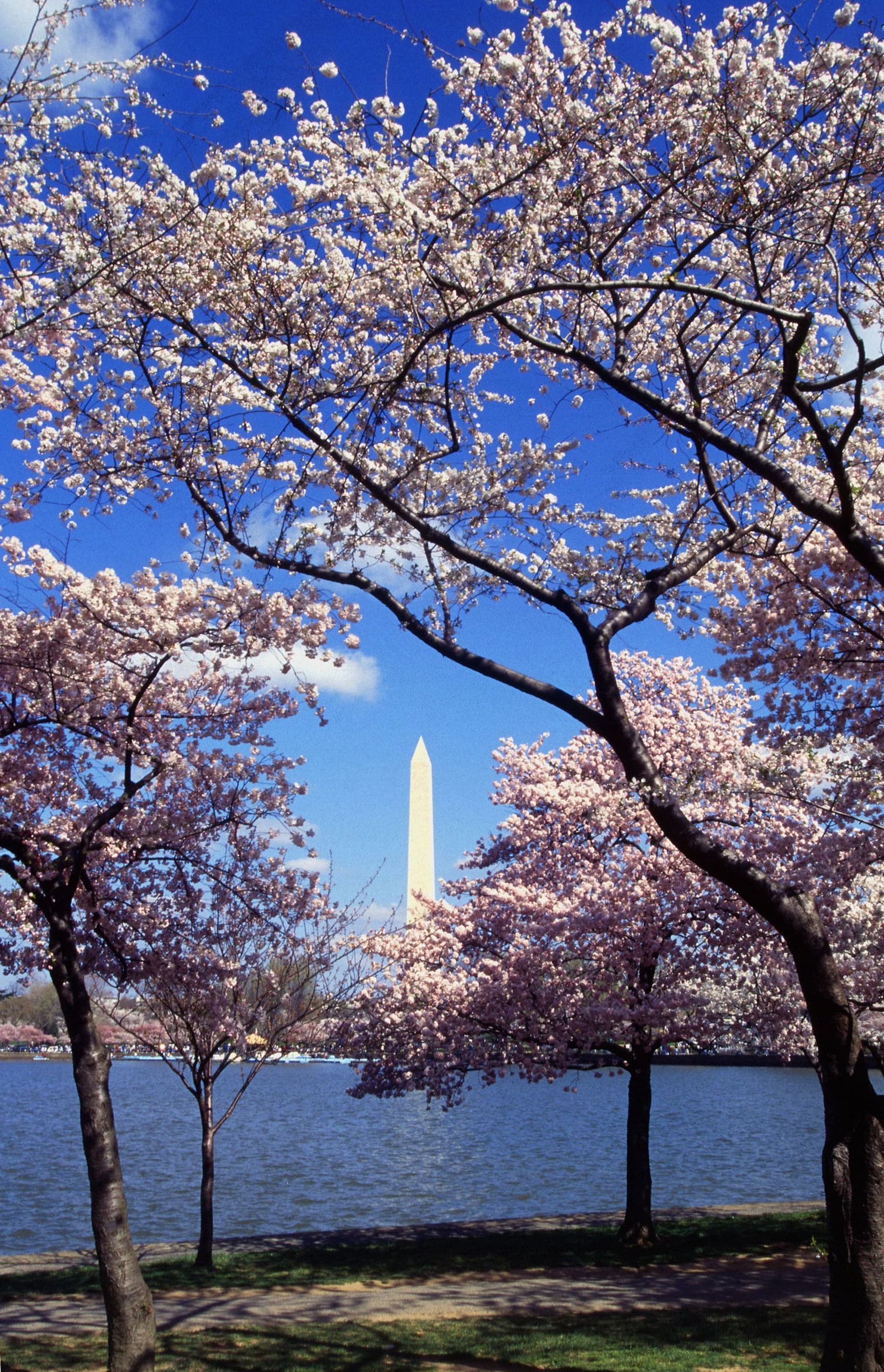
If you only have one blossom morning in DC this spring, run it like a local sprint rather than an all-day drift. The season is short, timing-sensitive, and crowd-loaded by design: in 2026, National Park Service (NPS) projects peak bloom for the Tidal Basin window at March 29 to April 1, and says blossoms usually hold for 7 to 10 days after peak begins.[1]
This plan keeps scope tight to two anchors:
- Tidal Basin Loop Trail for first-light Yoshino bloom and monument framing
- Hains Point (East Potomac Park) Loop for later-phase variety and breathing room
Why this specific two-anchor sequence works
NPS describes the Tidal Basin loop as an easy 2.1-mile circuit, ideal for the classic “cloud” effect of Yoshino trees.[2] When that core ring becomes saturated, Hains Point gives you a very different blossom rhythm: a 4.1-mile loop with broader space and late-phase tree diversity, including 481 Kwanzan trees that typically bloom about two weeks after Yoshinos.[3]
So the sequence is simple:
- hit Tidal Basin for peak-window iconography
- rotate to Hains Point when Tidal Basin is dense or if your trip lands later
That is the local-outcome version of hanami in DC.
Time window and transport reality (the part that decides your day)
Start with hard constraints from official transit and bloom guidance:
- National Cherry Blossom Festival window: March 20 to April 12, 2026.[4]
- Metro says Smithsonian is about a 10-minute walk to Tidal Basin; L’Enfant Plaza / Archives / Federal Triangle are each about a 20-minute walk and can reduce station crowding risk.[5]
- Metro also paused major track work from March 20 to April 18 for blossom season operations.[5]
Then layer local behavior: multiple r/washingtondc threads repeat the same advice—weekday sunrise beats every other crowd tactic, and visitors should favor Metro over trying to park directly near the Basin during peak days.[6][7]
8 local moves that change the outcome
- Commit to first light, not late-morning “pretty weather.” Local reports consistently point to dawn/sunrise as the lowest-crowd band.[6]
- Prefer weekday over weekend if your schedule allows. Community guidance repeatedly treats this as the biggest crowd-quality upgrade.[6]
- Use overflow stations intentionally. If Smithsonian is jammed, take the 20-minute walk from L’Enfant Plaza, Archives, or Federal Triangle.[5]
- Run the 2.1-mile Tidal loop once, clockwise, without over-stopping early. You get cleaner spacing and avoid getting trapped in the Jefferson bottleneck band.[2]
- If the Tidal ring is already wall-to-wall, pivot fast to Hains Point. Don’t spend your best light in queue friction.[3]
- Use Hains Point as your “late-season insurance.” Kwanzan bloom lags Yoshino by about two weeks.[3]
- If you want on-water views, time pedal boats by operating window. NPS lists seasonal daily rental operations from 10:00 to 17:00 (spring to fall).[8]
- Budget transit before you move. WMATA rail fares run $2.25–$6.75 on weekdays, with $13.50 1-day unlimited pass and free bus-to-rail transfer discounts using the same payment method.[9]
Non-local trapline: 3 mistakes visitors keep making
Mistake 1: Arriving at peak bloom but at the worst hour
Peak dates do not guarantee a good walking experience. Community reports show that timing inside the day matters more than timing inside the week; sunrise windows are repeatedly recommended.[6]
Better alternative: lock sunrise first, then lock date.
Mistake 2: Treating one station as mandatory
Many first-timers force Smithsonian even when platform density spikes.
Better alternative: pre-commit an overflow entry station (L’Enfant/Archives/Federal Triangle) and accept the extra walk to protect flow.[5]
Mistake 3: Assuming “blossom season is over” once Yoshino drops
Locals repeatedly point late visitors toward other areas and later-blooming varieties, especially East Potomac Park / Hains Point lanes.[3][7]
Better alternative: when Tidal looks spent, switch anchors rather than abandoning the outing.
Spend range and pace (realistic, one-morning version)
For a transit-first, two-anchor morning:
- Lean: roughly $2.25–$6.75 per rider for Metrorail, plus optional coffee/snack
- Comfortable: $13.50 1-day pass if you want no-fuss in/out hops and later city movement
- Add-on: pedal boat session during the 10:00–17:00 operating window if weather and queue conditions cooperate[8][9]
No reservations are required for the walking anchors; queue risk is entirely time-of-day dependent.
Navigation cue that prevents wandering
When you exit rail, orient around this rule: if your objective is the classic cloud-ring photos first, you are navigating toward the Tidal Basin Loop; if density breaks your pace, point yourself south-westward to Hains Point / East Potomac Park Loop and recover space there.[2][3]
That single pivot decision saves the day more often than any camera trick.
Sources
- NPS news release (2026 peak forecast, bloom duration)
- NPS Tidal Basin Loop Trail (2.1-mile loop and stop references)
- NPS Hains Point Loop Trail (4.1-mile loop, Kwanzan counts and bloom lag)
- National Cherry Blossom Festival official 2026 dates/events
- WMATA Cherry Blossom service page (walk times, service posture, pass options)
- r/washingtondc thread on Tidal Basin crowd timing (sunrise, weekday, Metro-first advice)
- r/washingtondc thread on late-window blossom alternatives (Arboretum/other varieties context)
- NPS Tidal Basin pedal boat operating window
- WMATA Cost to Ride (fare ranges and pass prices)