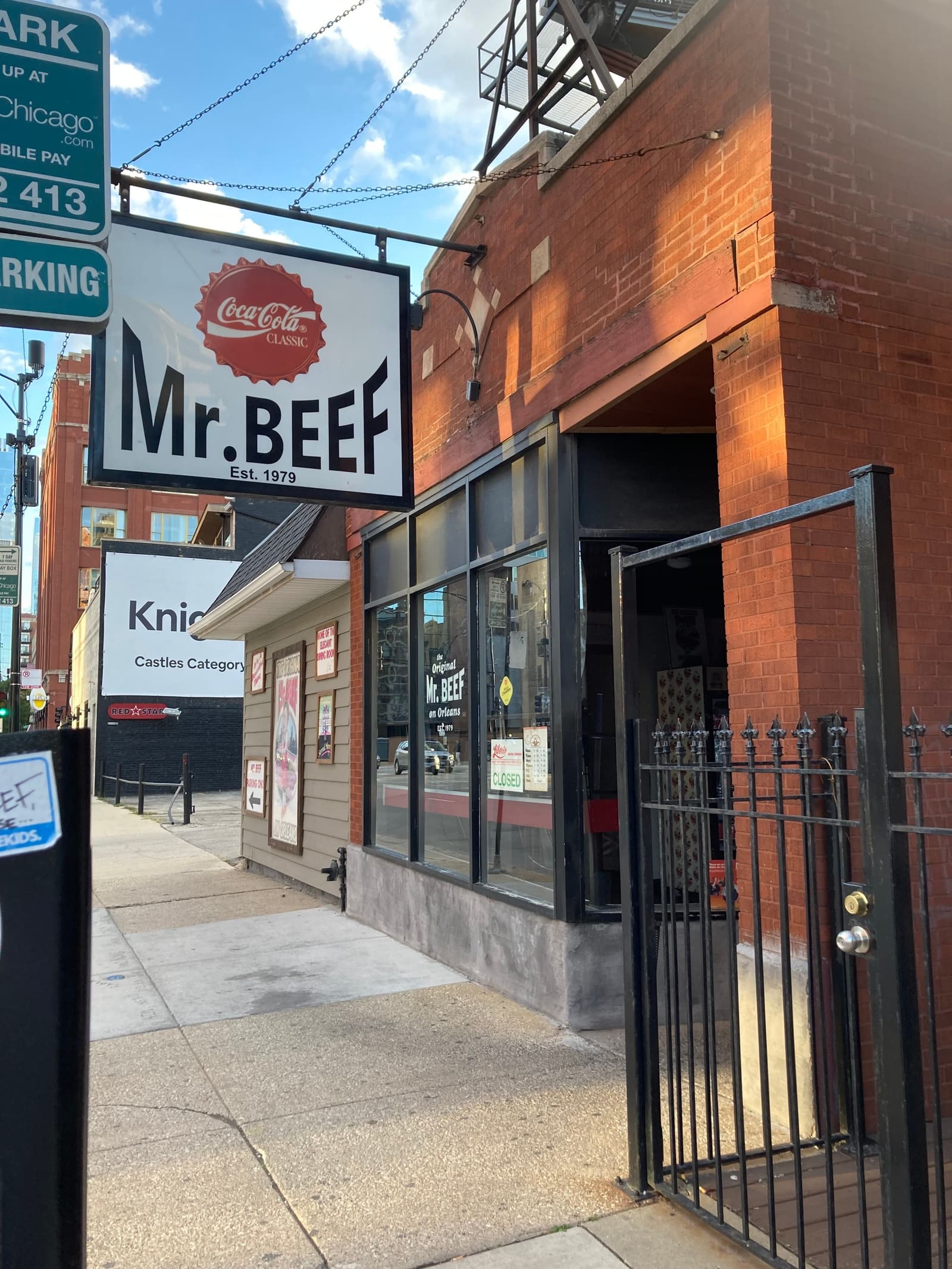
If you only have one Chicago lunch window and want it to feel local instead of checklist-touristy, run a short Orleans-to-Grand corridor: start at Mr. Beef (666 N Orleans), then walk west to Bari (1120 W Grand).[1][2]
This works because the two stops express different parts of the same city food logic: fast, messy, no-nonsense beef culture at the first door, then old-school Italian deli rhythm at the second.[3][4][5]
The two-anchor corridor
- Anchor 1: Mr. Beef on Orleans, River North; open 10:00–16:00, Monday–Saturday.[1]
- Anchor 2: Bari on Grand, West Town edge; open 08:00–18:00 (Mon–Sat), 08:00–14:00 (Sun).[2]
- Transfer: about 1.1 miles / 22–26 minutes on foot between doors (Grand Ave line), or a short bus-hop plus walk.[6]
- Reservation reality: neither stop is a reservation game; execution is about timing and order clarity, not booking.[1][2]
Timing windows that reduce friction
Use a two-wave lunch pattern:
- Wave A (cleanest): 10:45–11:25 at Mr. Beef.
- Wave B (backup): 14:10–15:00 at Mr. Beef, then Bari after the core lunch crush.
Why this matters:
- Local review patterns repeatedly flag the 11:45–13:30 block as the high-friction queue window at Mr. Beef.[4][5]
- Bari runs longer daytime service, so it absorbs schedule drift better than trying to reverse the sequence.[2][7]
Eight local moves that change outcomes
- Order by moisture first at Mr. Beef. Say dry / wet / dipped first, then peppers. If you hesitate at the counter, the line behind you compresses fast.[1][4]
- Cap queue risk explicitly. Set a 25-minute wait cap at Mr. Beef; if you hit it, move to Bari first and circle back near 14:00+.[4][5]
- Default to one pepper lane, not both. Sweet or hot (giardiniera) keeps the sandwich readable on first pass; “everything” often buries balance for new visitors.[3][8]
- Budget in two bands. Mr. Beef usually lands around $12–$18 with fries/drink; Bari add-on run typically adds $9–$15 depending sandwich size and extras.[4][7]
- Use the walk as palate reset. The 22–26 minute transfer keeps stop two from tasting like a duplicate heavy lunch.[6]
- At Bari, ask what’s moving that day. Local chatter and review threads repeatedly treat staff-guided picks as higher hit-rate than fixed internet ordering.[5][7]
- Keep total window at 95–140 minutes. Beyond that, you lose the microcosm advantage and drift into generic neighborhood wandering.
- Anchor navigation on street names, not vibes. Orleans → Grand westbound is the clean cue; if you start improvising side quests before stop two, timing breaks.
Common visitor mistakes (and better alternatives)
-
Mistake 1: arriving at Mr. Beef right at noon on a tight schedule.
Better move: hit 10:45–11:25 or hold for after 14:00.[1][4] -
Mistake 2: ordering without moisture/pepper decisions ready.
Better move: decide the combo before you reach the register; the line speed is part of the culture, not rudeness.[1][5] -
Mistake 3: treating the two stops as one giant meal.
Better move: split portions at stop one, walk the corridor, then finish with a smaller second order.
Quick logistics card
- Best sequence: Mr. Beef (early/late wave) → walk Grand corridor → Bari.
- Ideal total time: 1.5–2.3 hours including queue variance.
- Spend anchor: about $24–$33 per person for two-stop sampling.
- Transit cue: Chicago Brown/Purple line station to Mr. Beef is about a 7–10 minute walk; corridor continues west on Grand.[6][9]
- What to lock first: your Mr. Beef arrival slot, not your second stop.
Sources
- The Original Mr. Beef — hours and location (666 N Orleans, Mon–Sat 10:00–16:00)
- Bari Italian Subs — official hours and location (1120 W Grand)
- Eater Chicago (updated 2025-09-22) — best Italian beef map and neighborhood context
- Yelp — Mr. Beef on Orleans (local review stream, hours, queue pattern signals)
- Reddit r/chicagofood (2025 local threads on beef ordering and shop tradeoffs)
- Google Maps — Mr. Beef to Bari walking corridor estimate
- Yelp — Bari Foods community reviews and operating rhythm
- WTTW Chicago photo essay on Johnnie’s/Chicago beef ordering culture cues
- CTA rail maps/schedules (for Brown/Purple line approach planning)