As of 2026-03-28 UTC, the most important ERNIE 4.5 change is no longer the March 2025 launch moment or even the June 2025 open-source announcement by itself. The stronger signal is that Baidu gradually turned ERNIE 4.5 into a Paddle-native software lane: model weights, fine-tuning toolkit, deployment runtime, cross-framework mirrors, and cloud distribution now point in the same direction.[1][2][3][4][5][6]
That distinction matters because open weights alone do not create much strategic durability. A model family becomes operationally relevant when developers can fine-tune it, serve it, move it across familiar interfaces, and still find it inside the cloud control plane where production teams already buy access. ERNIE 4.5 is more interesting in 2026 precisely because Baidu pushed those layers into alignment.[1][2][3][4][6]
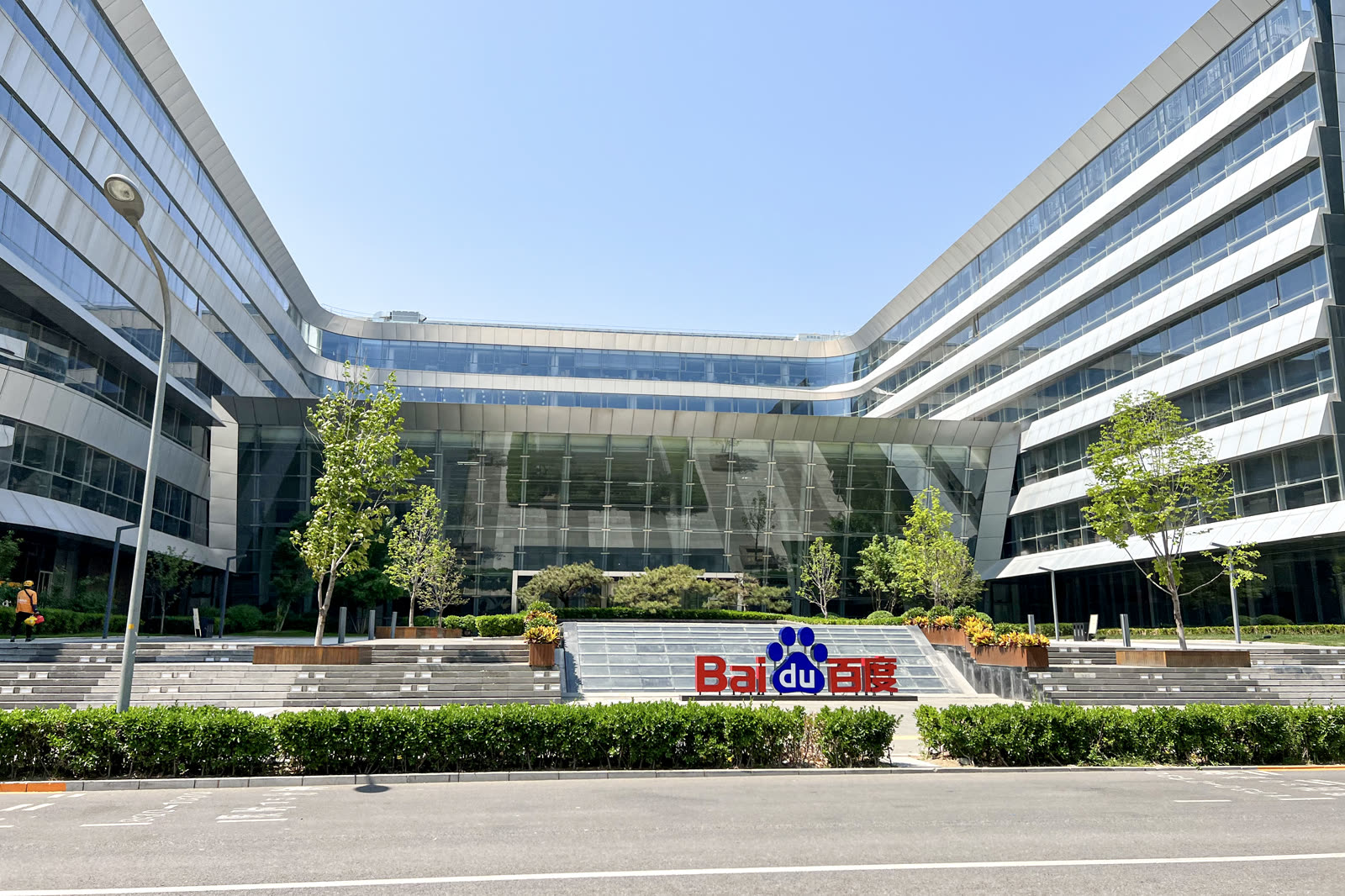
Image context: the cover uses a real Wikimedia Commons photograph of Baidu's ZPark Phase II campus in Beijing. That is the right visual here because the article is about a real company stack and deployment lane, not a generic AI abstraction.[7]
The baseline: March was a launch, June was a stack signal
Baidu's March 2025 baseline was still mostly a launch story. In its first-quarter results, the company highlighted the release of ERNIE 4.5 and ERNIE X1 as major model events inside the Baidu app and enterprise API surface.[5] That told the market Baidu still intended to compete on flagship model cadence.
The more durable shift came on 2025-06-30, when Baidu's ERNIE blog announced the open-source release of the ERNIE 4.5 model family: 10 variants, Mixture-of-Experts models with 47B and 3B active-parameter lanes, a largest model with 424B total parameters, a 0.3B dense model, and Apache 2.0 licensing.[1] The same post also made a second point that matters more than the raw parameter table: the models were trained on PaddlePaddle, and Baidu was open-sourcing the related development toolkits with multi-hardware support and streamlined deployment workflows.[1]
That is the moment ERNIE 4.5 stopped looking like only a proprietary Baidu model line and started looking like a software supply chain Baidu wanted other teams to enter.
Why the repository matters more than the headline
The public GitHub repository makes the release architecture concrete. Baidu's PaddlePaddle/ERNIE repo is not just a model card shelf; it ties the family to ERNIEKit for fine-tuning and compression, FastDeploy for inference and service deployment, and both Paddle and PyTorch-compatible formats for downstream use.[2]
That packaging matters because it reduces the usual open-model gap between "weights exist" and "teams can actually do something repeatable with them." A lot of open releases still leave developers stitching together fine-tuning scripts, quantization paths, inference servers, and client compatibility on their own. ERNIE 4.5's public packaging is trying to shorten that path inside Baidu's preferred tooling environment.[1][2]
The June blog post is explicit about this. It frames ERNIEKit as the industrial-grade toolkit for pre-training, SFT, LoRA, DPO, QAT, and PTQ, while FastDeploy is positioned as the efficient deployment layer with OpenAI-compatible and vLLM-aligned interfaces.[1] That means Baidu is not only open-sourcing a model family; it is trying to open-source the route by which the model family becomes useful.
FastDeploy is the bridge from model release to production lane
The August 2025 FastDeploy 2.0 post is where the stack logic becomes hard to miss. Baidu describes FastDeploy 2.0 as a large-model inference and deployment toolkit with native support for ERNIE 4.5, built on PaddlePaddle, with unified interface support, quantization down to 8-bit, 4-bit, and 2-bit, and optimization across NVIDIA plus several China-relevant hardware backends such as KUNLUNXIN P800, Iluvatar BI-V150, Hygon K100AI, and Enflame S60.[3]
That is a supply-chain statement, not a benchmark brag.
The important implication is that Baidu is trying to keep ERNIE 4.5 inside an end-to-end operating lane:
- train and adapt inside Paddle-centered tooling,
- deploy through FastDeploy with OpenAI-compatible endpoints,
- optimize quantization and scheduling inside the same runtime family,
- and keep heterogeneous hardware support close to the official stack.[1][2][3]
My inference from these sources is that Baidu wants ERNIE 4.5 to function less like a one-off research gift and more like a default domestic path for teams that want an official Chinese model family plus official deployment plumbing. That is strategically more meaningful than a single open-source day-one headline.
Qianfan is what turns an open release into a distribution surface
The cloud layer matters just as much as the repo layer. In Baidu's second-quarter 2025 results, the company said Qianfan's model library was expanded to include the open-sourced ERNIE 4.5 series and a broader range of third-party models, while still presenting Qianfan as its enterprise GenAI platform.[6]
That sentence changes how the release should be read.
If the repo and toolkits were the whole story, ERNIE 4.5 would still be a developer-distribution event. Once Qianfan also carries the family, the move becomes a dual-lane system:
- open models and toolchains widen the developer funnel,
- cloud distribution keeps Baidu in the enterprise control plane where production workloads, billing, governance, and managed access live.[2][6]
This is why ERNIE 4.5 is better understood as a stack update than as a pure release note. Baidu is aligning the model layer with the deployment layer and then reconnecting both to the managed platform layer.
The PyTorch mirror matters because it widens the adoption edge
Baidu's June blog explicitly says ERNIE 4.5 is also available in PyTorch-compatible formats, and the official Hugging Face model pages make that visible in the broader ecosystem.[1][4] That matters because a Paddle-native stack can still lose adoption if it demands a total toolchain migration from users who live elsewhere.
The PyTorch mirror changes the posture. It lets Baidu keep PaddlePaddle as the performance- and deployment-optimized home lane while still lowering entry friction for teams that browse, test, and distribute models through more globally familiar workflows.[1][2][4]
That is a pragmatic distribution move. It says Baidu is willing to export the model family through the interfaces the broader open-model market already watches, without giving up control of the most optimized official deployment path.
What this means for China AI competition
The broader China AI point is that model competition is no longer only about frontier quality claims. It is increasingly about who can synchronize release cadence, tooling depth, deployment support, and distribution surfaces.
ERNIE 4.5 looks stronger on that score than on any single isolated benchmark line. By late 2025, the family had an open-source announcement, an official repo, Apache 2.0 licensing, Paddle-centered tuning tools, FastDeploy service infrastructure, PyTorch-compatible mirrors, and Qianfan distribution in the same story arc.[1][2][3][4][6]
That is the kind of software supply chain alignment that can matter even if another model family wins more public benchmark headlines. It gives Baidu a better chance of keeping developers and enterprise buyers inside one branded path from experimentation to managed use.
Boundary conditions
There is still an important boundary here: most of the evidence is vendor-side. Baidu has clearly documented the lane, but public evidence for broad third-party production adoption is still thinner than the stack documentation itself.
This thesis weakens if three things happen together:
- the PyTorch mirrors stay visible but the optimized official path remains too Paddle-specific for broad external uptake,
- FastDeploy support lags behind the release cadence of future ERNIE families,
- and Qianfan's role becomes mostly a catalog layer rather than a sticky managed control plane for real workloads.
If those problems appear at once, ERNIE 4.5 would still be an impressive release package, but not necessarily a durable ecosystem lane.
What to watch next
First, watch whether later ERNIE families keep shipping with the same stack discipline: official weights, official adaptation path, official deployment runtime, and official cloud distribution together.[1][2][3][6]
Second, watch whether Baidu keeps using FastDeploy as the bridge across heterogeneous domestic hardware rather than letting deployment fragment into one-off model-specific recipes.[3]
Third, watch whether the open lane continues to feed Qianfan rather than cannibalize it. If open weights widen the funnel while Qianfan remains the enterprise operating surface, the strategy becomes much more defensible.[4][6]
Bottom line
The real ERNIE 4.5 signal is not simply that Baidu open-sourced a model family in June 2025. The stronger signal is that Baidu lined up Paddle training, ERNIEKit tuning, FastDeploy inference, PyTorch-compatible distribution, and Qianfan availability into one operational lane.
That is why this belongs in Stack & Supply Chain Update. The strategically important change is not one model drop. It is the emergence of a software stack that makes ERNIE 4.5 easier to adopt, easier to serve, and harder to treat as just another isolated model release.
Sources
- ERNIE Blog, "Announcing the Open Source Release of the ERNIE 4.5 Model Family" (2025-06-30; 10-model release, Apache 2.0 licensing, PaddlePaddle training, ERNIEKit, and FastDeploy references).
- PaddlePaddle, "ERNIE" GitHub repository (official repo for ERNIE 4.5 models, ERNIEKit workflows, FastDeploy links, and Paddle/PyTorch formats).
- ERNIE Blog, "FastDeploy 2.0: A Large-Scale Model Inference and Deployment Toolkit with Native Support for ERNIE 4.5" (2025-08-14; OpenAI-compatible serving, quantization, and heterogeneous hardware support).
- Hugging Face, "baidu/ERNIE-4.5-21B-A3B-PT" (official Baidu model page showing the PyTorch-compatible distribution surface).
- Baidu via PR Newswire, "Baidu Announces First Quarter 2025 Results" (2025-05-21; March 2025 launch baseline for ERNIE 4.5 and ERNIE X1).
- Baidu via PR Newswire, "Baidu Announces Second Quarter 2025 Results" (2025-08-21; Qianfan model library expanded to include the open-sourced ERNIE 4.5 series and third-party models).
- Wikimedia Commons, "File:Baidu Technology Park at ZPark Phase II (20220502113650).jpg" (source page for the cover photograph).