Imagine asking a music assistant for something that feels like walking home after a difficult day. A musician might translate that request into instrumentation, tempo and phrasing. Another listener might recognize the right song immediately but struggle to name its ingredients. An assistant that understands only the musician's vocabulary would make the second person do the translation before it could help.
MuChin makes that translation problem part of an AI benchmark. Published at IJCAI in 2024 by researchers affiliated with Zhejiang University, DuiNiuTanQin and Xi'an Jiaotong University, it pairs professional and amateur descriptions in Chinese. Its original test set contains 1,000 selected tracks.[1] The interesting unit is the same piece of music described through different kinds of attention.
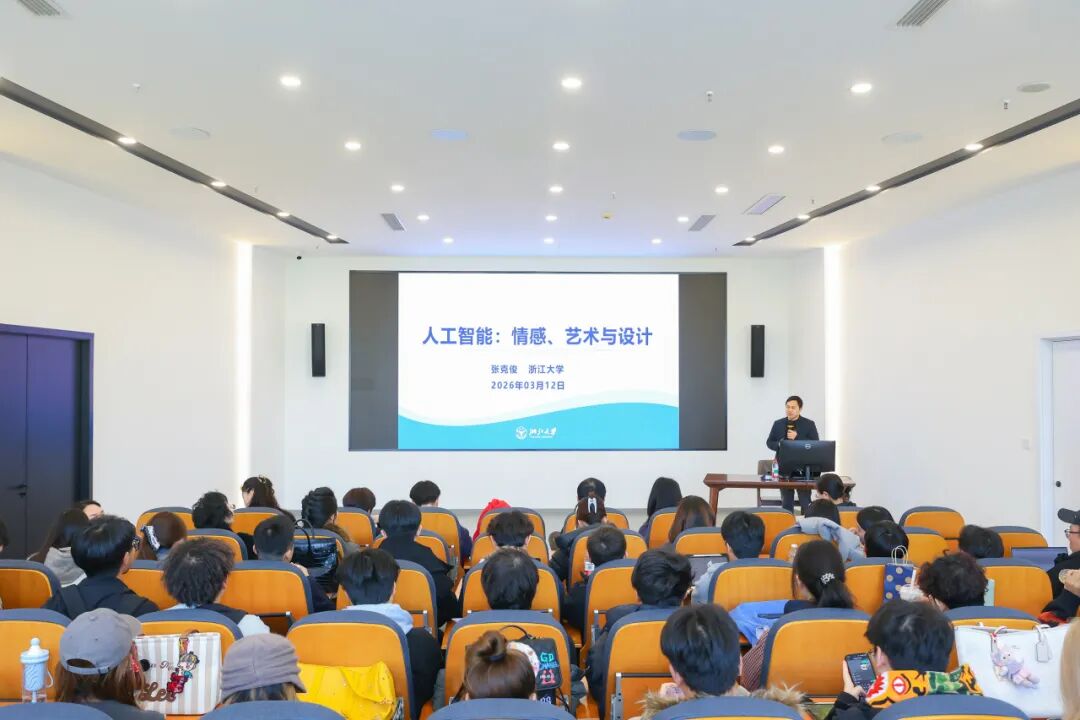
Who gets to describe the song?
Google's MusicCaps provides a useful earlier reference point: 5,521 ten-second music examples, with English descriptions written by musicians. Its captions describe the sound rather than identifying the artist.[2] That is a valuable listening task. But a carefully heard description and an accessible description are separate achievements. Someone can accurately name an instrument while failing to convey why another person would want to hear it.
MuChin recruited 109 amateur enthusiasts and 104 professionals, aged 19–35. Its annotation platform offered both popular and specialist vocabularies, while allowing annotators to add their own terms. The paper reports differences between the groups across descriptive dimensions.[1]
The design invites a useful inference: everyday language should be evaluated on its own terms. An amateur's mood or situation cue need not be a defective version of an expert's account. The two may answer different questions about the same recording. At the same time, this recruited age group cannot stand in for every Chinese listener. A benchmark can make an audience visible without representing the whole public.
The number measures a comparison
MuChin's music-understanding experiment fed audio representations through average pooling and a predictor with five linear layers to produce tags across ten dimensions. It then compared those tags with reference labels using bge-large-zh-v1.5 text embeddings. MERT-95M's reported amateur-description average was 0.5923.[1]
That number needs its machinery attached. In the released scoring code, cal_word_similarity compares every predicted tag with every reference tag within a dimension, takes their embedding dot products, and averages the resulting pairs. It also returns their standard deviation.[4] This is a particular way of measuring how descriptions relate in a learned language space.
Consider a simplified example, invented to illustrate the calculation. Suppose the reference tags are “piano” and “violin,” and the prediction contains those same two tags. An all-pairs calculation includes piano against piano and violin against violin, but also piano against violin in both directions. Even perfect recovery of the two labels therefore includes comparisons between different instruments. Adding another tag changes the set of comparisons again.
This does not make the score useless. It changes what an improvement means. A higher average can be evidence of closer semantic alignment under a fixed evaluator; it does not directly count correctly heard details. BAAI's own embedding documentation emphasizes relative score ordering and recommends choosing any similarity threshold using the task's data.[5] Calling 0.5923 “59.23 percent accurate” would invent a meaning the measurement does not supply.
For an evaluator, the practical next step is to place a few predictions beside their reference tags and listen to the corresponding recordings. Does the score reward a useful paraphrase? Does it distinguish a wrong instrument from a broadly appropriate mood? Those are proposed checks on the metric's usefulness, rather than claims that the published system has passed them.
More songs, a different experimental responsibility
As checked on November 16, 2026, the project's expanded V2 repository offers 6,066 unique songs, retaining professional and amateur descriptions alongside structural and rhyme annotations. It distinguishes that collection from the original 1,000-track release and presents the larger resource as material for model training and alignment.[6]
The expansion changes what researchers can build, but it does not retroactively enlarge the test behind the 2024 results. Any new comparison should name the release, identify which songs were used for training, and preserve a test partition that the model has not learned from. Otherwise, familiarity with recordings or annotations could masquerade as improved understanding of unfamiliar requests.
A 2025 follow-up in Findings of ACL puts the paired descriptions to work in the opposite direction: generating songs from professional and amateur prompts. Its MuDiT/MuSiT framework uses a Chinese music–language encoder to connect descriptions with audio, and uses MuChin during fine-tuning.[7] The shift is consequential. A captioning system must choose words for something heard; a generator must choose sounds for something requested.
That makes the two audiences a useful basis for comparison. One proposed test would hold the intended musical result steady while varying how technically the request is expressed, then collect listening judgments from both groups. Success would mean that the plain-language request remains effective, without requiring the listener to acquire a producer's terminology first.
MuChin's lasting contribution is a place to start that test. The paired descriptions preserve a difference that a single reference caption can hide. The next convincing result should show which listeners benefit, on which unfamiliar songs, and whether the improvement survives being heard as well as scored.
Sources
- Zihao Wang et al., “MuChin: A Chinese Colloquial Description Benchmark for Evaluating Language Models in the Field of Music,” IJCAI 2024, pp. 7771–7779—annotation design and Section 4.3/Table 1 evaluation.
- Google, MusicCaps dataset card—clip duration, musician-authored English descriptions and dataset scope.
- Zhejiang Conservatory of Music, account and photographs of Kejun Zhang's March 12, 2026 lecture, published March 18, 2026—institutional photographic source.
- MuChin,
semantic/data_analysis.py, commit 1b0a341—implementation ofcal_word_similarity. - Beijing Academy of Artificial Intelligence, BGE-large-zh-v1.5 model card—FAQ on interpreting similarity scores and choosing thresholds.
- MuChin-V2-6066, official repository—expanded dataset, retained annotations and distinction from V1; accessed November 16, 2026.
- Zihao Wang et al., “Generative Music Models' Alignment with Professional and Amateur Users' Expectations,” Findings of ACL 2025—paired descriptions used in song generation.