Ant's most useful Ming-Flash-Omni 2.0 signal is not that it can see, hear, speak, and draw. Plenty of Chinese model launches now make broad multimodal claims. The sharper release-note read is that Ant is trying to make those abilities behave like one deployable contract: one model family, one open artifact, one routing surface across text, image, video, audio, speech output, and image generation.
As of 2026-06-04T08:32:51Z UTC, Ant Ling's own Ming documentation had been updated on June 3, 2026 and described Ming as an open-source full-modal large language model built around "modal unity + task unity."[1] That phrase is the tell. Ant is not only advertising a capable visual-language model with audio bolted on. It is arguing for a product boundary where perception and generation across several media types can be treated as one system rather than a bag of specialized services.
What changed in the 2.0 line
The official Ming page positions Ming-Flash-Omni as a hundred-billion-parameter-scale, unified multimodal MoE model that supports text, images, audio, and video. It lists four core capability lanes: image-text understanding, video analysis, speech synthesis, and image generation/editing.[1] The Hugging Face card for inclusionAI/Ming-flash-omni-2.0 makes the release envelope more concrete: it is tagged as an any-to-any model, links to both Ming technical reports, carries an MIT license, and lists inputs across image, text, video, and audio with outputs in image, text, and audio.[2]
That is a different kind of model-card claim from "our vision model improved." In a production workflow, the hard part is often not recognizing one image or transcribing one clip. It is carrying context across steps: a user uploads a product photo, asks a spoken question, references a prior video segment, requests a revised image, and expects the assistant to stay in the same task rather than hand off between brittle subsystems. Ming's public materials are aiming directly at that handoff cost.[1][2]
The numeric envelope matters, but it should be read carefully. The Hugging Face card says the 2.0 release uses the Ling-2.0 architecture, a Mixture-of-Experts framework with 100B total and 6B active parameters.[2] The revised Ming-Flash-Omni paper, last updated on March 26, 2026, describes a sparser MoE variant with 100 billion total parameters and 6.1 billion active per token.[3] Those numbers do not prove real-world quality by themselves. They explain the design trade: Ant wants large model capacity without forcing every token through the whole parameter budget.
The baseline moved from unification to usable unification
The earlier Ming-Omni paper, submitted on June 11, 2025, framed the baseline ambition: a single multimodal model that processes images, text, audio, and video while also supporting speech and image generation.[4] That original paper matters because it shows the direction was not an accident of the 2.0 launch. Ant was already trying to avoid a stack where one model sees, another talks, another edits, and glue code carries the product risk.
Ming-Flash-Omni tightens that thesis. The later paper says the upgraded model improves multimodal understanding and generation, supports seamless switching among multimodal tasks in multi-turn interactions, strengthens contextual and dialect-aware ASR, and introduces better image-control and editing behavior, including segmentation and text rendering.[3] The Hugging Face card turns the same story into developer-facing use cases: free modality switching, streaming video conversation, controllable audio generation, and controllable image generation.[2]
The release-note implication is practical. If the same model boundary can handle perception, reasoning, speech response, and image synthesis, teams can prototype richer assistants without designing a separate orchestration layer for every modality. That does not remove the need for product engineering, safety review, latency control, or media-specific evaluation. It changes where the integration burden starts.
Deployment support is the real second signal
The vLLM-Omni documentation is important because it treats Ming-Flash-Omni 2.0 as something to run, not only something to admire. The docs describe it as an omni-modal model supporting text, image, video, and audio understanding, with text and speech outputs. They also list three deployment modes: Thinker + Talker for text and audio, Thinker only for multimodal understanding, and Thinker + Imagegen for image output in online serving.[5]
That split is a useful production clue. A team may not want the full model path for every request. Some workloads need only text output after image or video understanding. Others need spoken responses. Others need image generation or editing. Exposing those modes gives developers a way to trim the serving surface to the job rather than treating "omni" as one expensive always-on switch.[5]
There is also a China-specific distribution layer. The Hugging Face card points to ModelScope for downloads and explicitly recommends that route for users in mainland China.[2] That mirrors a broader AI-China pattern: open-weight influence is global, but domestic developer convenience often depends on China-accessible mirrors, local docs, and integration paths. Ming's open release is therefore not just a research artifact. It is part of a distribution system that lets Ant participate in both global open-model attention and domestic developer adoption.
What to believe, and what to withhold
The safest reading is not that Ming-Flash-Omni 2.0 has solved multimodal intelligence. The sources are mainly provider materials and technical reports from the model team. Claims about state-of-the-art performance, benchmark parity, dialect-aware ASR, and editing consistency should be treated as directional until independent evaluations test the same tasks under clear input, hardware, latency, and judging conditions.[2][3]
The stronger and better-supported claim is architectural and product-shaped: Ant is making a serious open-model bid for unified multimodal deployment. The official docs, model card, papers, and vLLM-Omni support all point to the same spine: one sparse MoE model family, multiple media inputs, multiple output modes, developer downloads, and deployment configurations that let teams choose how much of the omni stack to activate.[1][2][3][5]
That is why Ming deserves its own AI-China bucket rather than being folded into a generic "China multimodal models are improving" note. Qwen, Hunyuan, SenseNova, Seed, and others all have their own multimodal lanes. Ming's distinction is Ant's attempt to make unification itself the product contract. The pitch is not only that a model can look at a photo or talk back. It is that multimodal work should move through one coherent model surface when the task crosses media boundaries.
What to watch
The first watch item is independent evaluation. Ming-Flash-Omni's model card and papers make strong benchmark and capability claims, but the useful question is whether neutral tests reproduce the multi-turn switching behavior, speech quality, video grounding, image-editing consistency, and text rendering under production-like constraints.[2][3]
The second is serving cost. A 100B total-parameter model with 6B to 6.1B active parameters is designed for efficiency, but real deployments still have to pay for video frames, audio handling, image generation, memory allocation, and output latency.[2][3][5] The vLLM-Omni deployment modes are promising because they expose ways to narrow the active path; they do not make serving free.[5]
The third is ecosystem pull. If Ming becomes a common reference point in open multimodal tooling, local Chinese developer workflows, and downstream applications that need speech plus visual reasoning plus image editing, Ant's AI position becomes broader than Ling/Ring reasoning headlines. If adoption stays limited to demos and model-card curiosity, the release remains interesting research but not yet a durable platform signal.
The practical conclusion is narrow: Ming-Flash-Omni 2.0 matters because it tests whether a China-origin open model can make "omni" feel less like a launch adjective and more like a usable engineering boundary. In 2026, that is one of the more important AI-China questions. The frontier is no longer only about who has the smartest text model. It is about who can make mixed media tasks coherent enough for developers to build on without rebuilding the model stack themselves.
Sources
- Ant Ling developer docs, "Ming" (updated June 3, 2026) - official Ming model-family page covering full-modal framing, supported modalities, capability lanes, milestones, and use cases.
- inclusionAI, "Ming-flash-omni-2.0" model card on Hugging Face - release notes, MIT license, input/output modalities, model size, downloads, ModelScope route, and usage examples.
- Inclusion AI et al., "Ming-Flash-Omni: A Sparse, Unified Architecture for Multimodal Perception and Generation," arXiv:2510.24821 (v3 revised March 26, 2026).
- Inclusion AI et al., "Ming-Omni: A Unified Multimodal Model for Perception and Generation," arXiv:2506.09344 (submitted June 11, 2025) - baseline paper for the original unified perception/generation design.
- vLLM-Omni documentation, "Ming-flash-omni 2.0" - deployment modes for thinker/talker, thinker-only, image generation, and multimodal offline inference examples.
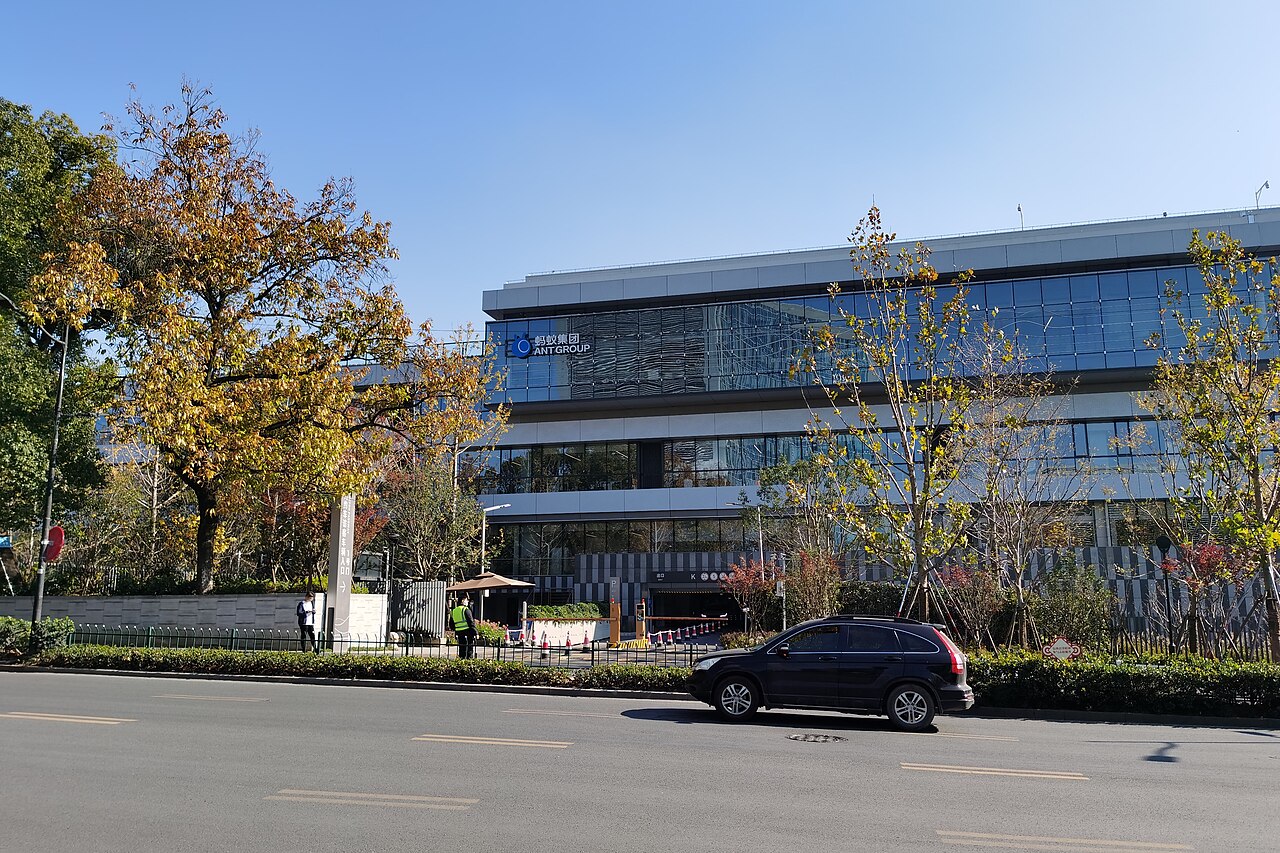
- Wikimedia Commons, "File:Ant A Space, Hangzhou, 2021-12-02.jpg" - source page for the real photographic image used as this article's cover.