As of March 2026, the meaningful China AI shift is no longer just model quality or OpenAI-compatible endpoints. The deeper stack change is that MCP is moving up from protocol to distribution layer.
That sounds subtle, but it changes where leverage and lock-in live. Once vendors stop treating MCP as a thin adapter and start packaging it as a hosted service, a plugin marketplace, or a quota-bound remote bundle, the buyer is no longer choosing only a model. The buyer is choosing a northbound control plane for tools, agent workflows, and publish paths.[1][2][3][4][5][6][7]
For procurement and platform teams, that shifts the real standardization decision upward as well: the harder question is no longer only which model endpoint you can swap, but which tool surface gets to meter, approve, catalog, and publish work across the stack.
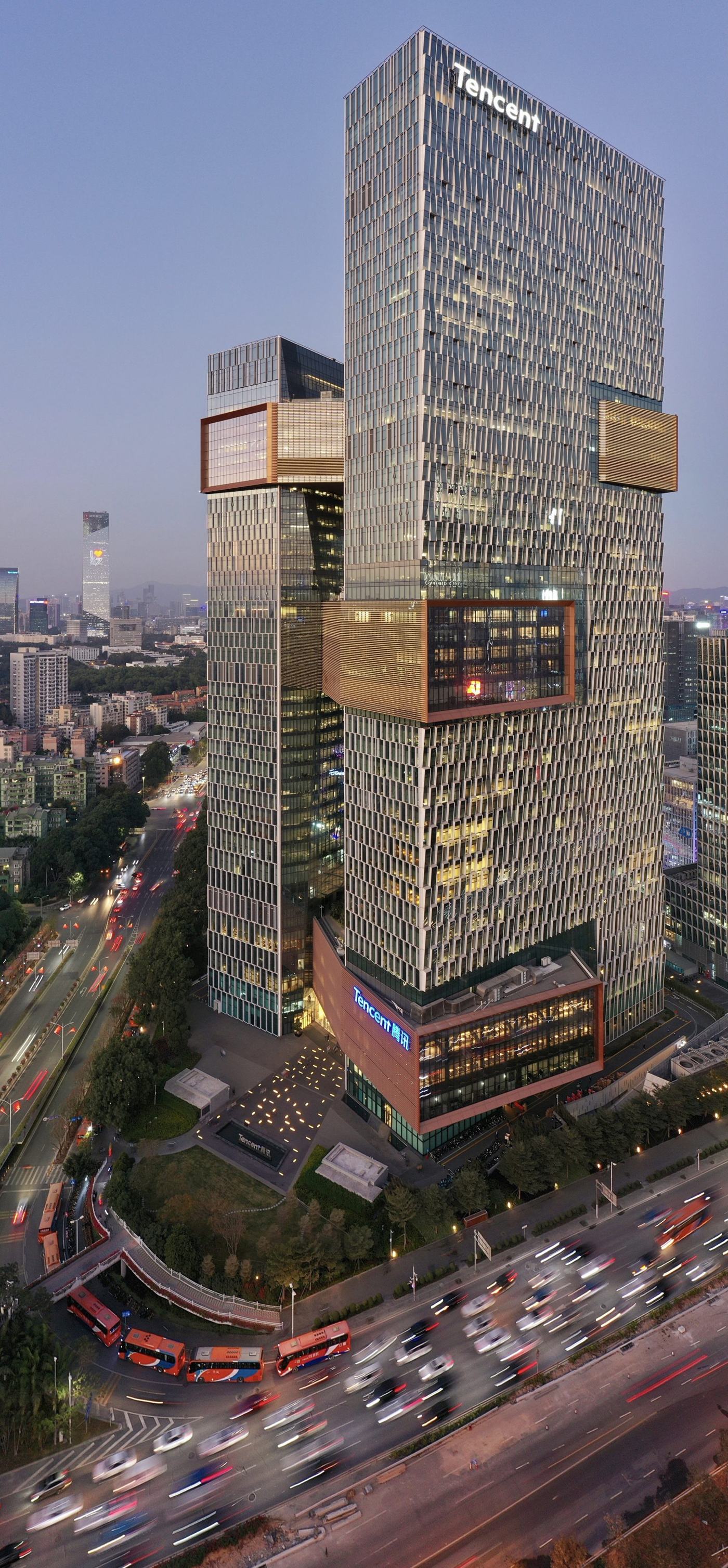
Image context: Shenzhen’s Tencent Binhai headquarters grounds this stack discussion in a real platform operator setting where MCP packaging decisions move from protocol support into productized distribution surfaces.
What changed: tool calling is being repackaged into a platform surface
Qwen’s current agent framework makes the first layer clear. In the Qwen-Agent docs, MCP is already a first-class install option (qwen-agent[... ,mcp]), and the agent can be configured directly through an mcpServers block while still pointing at either local OpenAI-compatible servers or DashScope-compatible endpoints.[1] That is more than a feature checkbox. It means the SDK assumes tool distribution is part of the normal application surface.
Alibaba Cloud Model Studio goes one layer higher. Its February 2026 MCP documentation no longer talks about MCP as a developer-side experiment; it presents official cloud-deployed MCP services that can be opened and embedded into agents or workflows inside the platform, with external-call support for third-party applications as well.[2] In the agent application path, a single agent can attach up to 5 MCP services.[2]
Alibaba’s custom MCP docs then widen that into a true platform supply chain. A developer can bring MCP in through three different paths: script deployment for npx/uvx packages, AI gateway import for existing REST APIs, or Alibaba OpenAPI import for cloud-resource operations.[3] Once a platform supports hosted MCP, gateway-wrapped MCP, and cloud-product MCP under one control plane, the vendor is no longer only selling inference. It is selling the assembly line above inference.
Zhipu and Tencent show the next turn: distribution is now client-shaped
Zhipu’s coding-plan docs make a different bet. Instead of centering a hosted workflow canvas, they package MCP as ready-to-consume server products for coding clients.
The search MCP server exposes a remote HTTP endpoint for Claude Code, Cline, OpenCode, Crush, Goose, and similar MCP-compatible clients.[4] The ZRead MCP page pushes the pattern further: a dedicated remote server for open-source repository access, explicit client-by-client config examples, and quota tiers tied to plan level — 100 monthly calls on Lite, 1,000 on Pro, and 4,000 on Max for the ZRead/search/web-read bucket.[5]
Zhipu’s visual MCP documentation shows the complementary local-package model. The visual server is distributed as an npm package (@z_ai/mcp-server) for local stdio use, yet still tied to a commercial key and a shared prompt resource pool with a 5-hour recovery window for the visual quota bucket.[6] In other words, even when the server runs locally, commercial control still sits upstream in authentication, quota, and packaging.
Tencent’s agent platform lands in a third place: marketplace governance. Its plugin docs, updated in November 2025, define 4 plugin types — API, MCP, code, and app — and 3 source classes — official, third-party, and custom.[7] The December 2025 usage guide then shows MCP plugins being pulled into Multi-Agent applications and pushed through a publish flow into production-facing links and API access.[8]
The common pattern across Zhipu and Tencent is that MCP is no longer just a protocol engineers wire up on their own. It is being turned into a distribution format that is shaped by the client or platform surface.
Three packaging models are now visible in China AI stacks
By 2026Q1, the market is already showing three distinct MCP packaging models.
1. SDK-assembled MCP
Qwen-Agent represents the lightest version. The framework exposes MCP configuration and leaves the developer holding most of the composition logic: model endpoint, tool server mix, and runtime assembly.[1]
This is the most portable shape, but it also leaves more operational work on the builder side.
2. Hosted MCP platform
Alibaba pushes MCP into the managed middle layer. Official services, workflow nodes, agent integration, gateway import, and OpenAPI import all live under one platform boundary.[2][3]
This reduces assembly friction, but it also concentrates lifecycle control inside the vendor’s console, credentials, and deployment abstractions.
3. Marketplace or remote MCP bundle
Zhipu and Tencent both package MCP as something closer to a catalog item than a raw protocol. In Zhipu’s case, that means remote or local MCP products aimed at coding clients with plan-bound quotas and prewritten config blocks.[4][5][6] In Tencent’s case, it means a plugin square and publish path that determines how tools enter agent apps and how those apps move to production.[7][8]
This reduces discovery friction, but it shifts the decisive boundary to catalog governance, approval, and bundling policy.
In plain buyer language, the split already looks like this:
- Qwen-Agent gives you the lightest portability story, but also the most assembly work.[1]
- Alibaba Cloud Model Studio removes setup friction fastest, but pulls more lifecycle control inside the vendor boundary.[2][3]
- Zhipu and Tencent make discovery and rollout easier, but attach more stickiness to quotas, catalog placement, and publish rights.[4][5][6][7][8]
A 30-second demo filter for buyers
If you want to know whether a vendor is merely “supporting MCP” or quietly turning it into a distribution surface, watch the product demo for three tells.
- If the demo starts with a hosted service catalog, you are already looking at platform-mediated tool distribution rather than a neutral protocol lane.[2][3]
- If the demo emphasizes ready-made remote endpoints, client-specific setup blocks, or plan-tier quotas, the vendor is packaging MCP as a commercial bundle, not just an interface standard.[4][5][6]
- If the demo ends at publication, sharing, or production rollout, the real product is the publish surface sitting above MCP compatibility.[7][8]
That filter helps because compatibility language is now cheap. What matters is where the workflow starts to depend on catalog control, quota policy, and publish rights.
Compatibility is improving, but fragmentation is moving upward
This is why “MCP support” is already too shallow a question.
At the protocol level, compatibility is genuinely getting better. The official MCP docs still describe the standard as a shared way for AI applications to connect to tools, data, and workflows across clients and servers.[9] On that narrow definition, the market is converging.
But supply chains are fragmenting above the protocol. The new divergence points are:
- who hosts the server,
- where auth and billing are enforced,
- whether tools sit in a workflow canvas, a plugin marketplace, or a client config file,
- and how quota, publication, or approval gates are attached to the tool surface.
That is a more important split than raw interoperability because it determines the real migration boundary. Moving a model endpoint is increasingly easy. Moving the packaged tool surface, the quota logic, the workflow bindings, and the release path is harder.
Three buyer questions that surface the real lock-in
Before signing a platform deal, ask three blunt questions.
- Can MCP definitions, auth settings, and tool metadata be exported cleanly without rebuilding the agent inside the vendor console? If not, your MCP lane is only superficially portable.
- Are quotas enforced at the protocol endpoint, the client plan, or the marketplace listing? The higher that control point sits, the less transferable your “compatible” tool surface really is.
- Can the same tool move from an internal workflow to an external publish surface without passing a vendor-only approval step? If publication requires a proprietary gate, then distribution power still sits above the protocol.
If the answers are fuzzy, lock-in is already higher than the protocol diagram suggests.
What to watch next
Three practical watch items matter over the next quarter.
- Will more Chinese vendors publish hosted MCP catalogs, not just protocol support? Alibaba has already crossed that line.[2][3]
- Will remote MCP endpoints become truly client-neutral, or stay packaged around a few favored coding clients and plan tiers? Zhipu’s current docs still show client-specific packaging and quota framing.[4][5][6]
- Will marketplace governance become the real moat? Tencent’s model suggests plugin sourcing, app publication, and production rollout can become just as sticky as model APIs.[7][8]
If the answer to all three is yes, then the next China AI control battle is not over base models alone. It is over who owns the northbound distribution layer where tools, agents, and publish surfaces meet.
Bottom line
China AI vendors are starting to package MCP as infrastructure for distribution, not merely interoperability.
That is the important stack update in 2026Q1. Protocol convergence is real, but the market is fragmenting at a higher layer: auth, quotas, catalogs, workflow embedding, and publish control. Buyers who still treat MCP as a simple compatibility badge are reading the stack one layer too low.
Sources
- Qwen-Agent docs (MCP install option,
mcpServers, OpenAI-compatible/local endpoint examples). - Alibaba Cloud Model Studio official MCP services docs (official cloud-deployed services, agent/workflow integration, external calls, max 5 MCP services in agent apps).
- Alibaba Cloud Model Studio custom MCP docs (script deployment, AI gateway import, OpenAPI import).
- Zhipu search MCP docs (remote MCP endpoint, client support/config examples).
- Zhipu ZRead MCP docs (remote MCP packaging, client support, Lite/Pro/Max monthly quotas).
- Zhipu vision MCP docs (local npm MCP package, client integration, shared 5-hour quota pool).
- Tencent agent platform plugin docs (4 plugin types, 3 source classes, MCP in plugin square).
- Tencent agent platform MCP plugin usage docs (Multi-Agent integration and publish flow).
- MCP official introduction (standard scope and ecosystem support).