As of 2026-05-09 UTC, the most useful way to read Tencent's current model stack is not to start with one more Hunyuan model card. The stronger ai-china signal is a distribution split. Tencent's own Hunyuan overview now says the platform's capabilities will be gradually migrated to TokenHub, that the old Hunyuan surface will stop receiving new model capabilities, and that it will stop supporting new purchases for model services.[1] That is not a small documentation cleanup. It is Tencent telling customers where future growth is supposed to happen.
The distinction matters because the Hunyuan name is not disappearing. Tencent still presents Hunyuan as its self-developed model family and still markets familiar strengths such as text, code, multimodal capability, and an AI search plugin that draws on Tencent's own content ecosystem.[1][2] But the commercial center of gravity is moving. If a customer wants new model access or broader capability choices, Tencent's own docs now route that demand toward TokenHub.[1]
That is why this is a market-and-macro story rather than a release-note story. Tencent is separating the model brand from the commercial control surface. Hunyuan remains the legacy label and installed base. TokenHub is becoming the place where new model buying, model comparison, third-party aggregation, pricing logic, coding-tool integration, and API compatibility actually converge.[3][4][5][6]
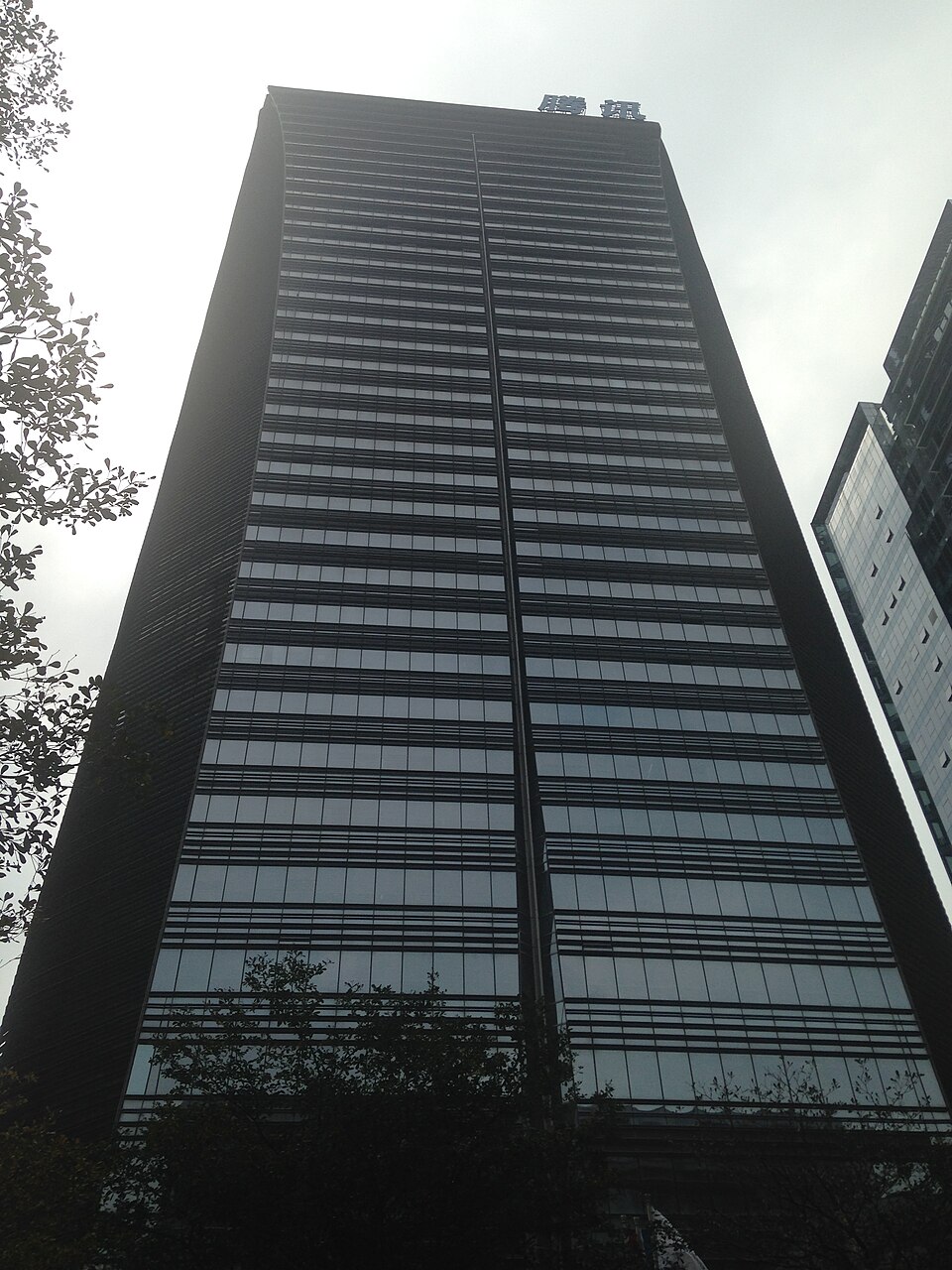
Image context: the cover uses a real Wikimedia Commons photograph of Tencent headquarters in Shenzhen. That is the right visual here because the article is about a company-level go-to-market shift, not about an abstract benchmark chart or a generated AI illustration.[7]
Hunyuan now reads like the legacy front door
Tencent's Hunyuan documentation is unusually explicit about the transition. The product overview page says the migration is being done "to further improve the large-model service experience," but the operational meaning is much sharper: after migration, the original platform will no longer add new model capabilities and will stop supporting new model-service purchases.[1] Users who already bought services can continue using them, but the page tells anyone who wants to activate new services or use more capabilities to go to TokenHub instead.[1]
That language effectively reclassifies Hunyuan. It remains the model family and the public brand under which Tencent still describes text, image, video, 3D, and search-linked model capability.[1][2] Yet it is no longer the clear growth surface for new commercial demand. It looks more like a legacy access layer for the installed base plus a brand wrapper around Tencent's in-house models.
Tencent's product-dynamics page reinforces that reading. It still lists Hunyuan release history, including TurboS and T1 updates, but it carries the same migration warning at the top.[2] In other words, Tencent is not erasing the Hunyuan timeline. It is preserving the model lineage while moving the commercial frontier elsewhere.
TokenHub is the new growth surface because it unifies supply, not just branding
The replacement surface is broader than a renamed Hunyuan console. Tencent's TokenHub introduction says the platform is a one-stop large-model service platform that offers a unified model access capability for enterprises and developers.[3] More importantly, it does not stop at Tencent models. The same page says TokenHub aggregates Hunyuan, DeepSeek, MiniMax, Kimi, Zhipu GLM, and Qwen, covering text generation, image generation, video generation, and 3D generation.[3]
That changes the commercial proposition. Hunyuan was a house brand. TokenHub is being positioned as a marketplace and service layer above both Tencent and third-party supply. Tencent's general TokenHub page says the platform supports pay-as-you-go calls, guaranteed resources, and dedicated deployment, and its docs describe a stack of model square, online experience, online inference, monitoring, pricing, and API protocols.[4][5] This is the structure of a control plane, not just a model landing page.
The model-list page makes the difference visible in catalog form. TokenHub's current list includes Tencent models such as HY 2.0 Think, HY 2.0 Instruct, and Hunyuan-role, but also external lines such as DeepSeek, GLM-5, Kimi-K2.6/K2.5, and MiniMax-M2.7/M2.5.[5] The same page standardizes capability tags like deep thinking, network search, structured output, Function Calling, and Cache across the catalog.[5] That is not only aggregation. It is normalization.
My inference from these pages is that Tencent wants customers to make one procurement and routing habit change: stop choosing between separate vendor silos first, and start choosing inside Tencent's own unified service layer.
API compatibility and coding-tool guides show where Tencent wants usage to land
The strongest proof that TokenHub is the growth surface is not only the migration banner. It is the developer path Tencent is building around it.
TokenHub's API usage page, updated on 2026-05-07, says the platform is compatible with both OpenAI API and Anthropic API protocols and can be accessed directly with the OpenAI SDK.[6] The same page lists model IDs from multiple providers under one endpoint family, including Hy3 preview, HY 2.0 Think, HY 2.0 Instruct, DeepSeek-V4-Flash, DeepSeek-V4-Pro, GLM-5.1, Kimi-K2.6, and MiniMax-M2.7.[6] That is the real distribution move. Tencent is turning multi-model access into a standard API habit that it owns.
The broader TokenHub docs push the same behavior into actual work tools. The platform guide has dedicated sections for OpenClaw, AutoClaw, WorkBuddy, CodeBuddy Code, OpenCode, and Claude Code under Token Plan and coding-tool integration paths.[4] Separate TokenHub docs then show how specific models such as Hy3 preview can be wired into Cline and OpenClaw through TokenHub's OpenAI-compatible base URL and its own model naming conventions.[8][9]
That matters because it shows Tencent is not treating TokenHub as a passive catalog. It is teaching users to consume models through Tencent's chosen compatibility layer, billing layer, and tool-integration layer even when the workload lives in third-party coding or agent surfaces.
Why this matters in AI-China
The important shift is commercial and strategic. Once Tencent puts Hunyuan into legacy mode for new purchases while promoting TokenHub as the unified access layer, it gains a different kind of leverage.[1][3][4][6] It can still benefit when customers choose Tencent's own Hunyuan models. But it can also keep the routing, monitoring, pricing, compatibility, and developer workflow inside a Tencent-controlled surface even when customers prefer DeepSeek, Kimi, GLM, Qwen, or MiniMax.[3][5][6]
That is a meaningful hedge in China's current model market. Model leadership changes quickly. The distribution layer that sits above model choice can persist longer. Tencent appears to be adjusting accordingly. Instead of asking Hunyuan alone to do every job at once, it is turning TokenHub into the place where model choice becomes a managed service decision.
The narrow conclusion supported by the sources is straightforward. Tencent is not abandoning Hunyuan. It is repositioning it. Hunyuan remains the model family and legacy customer surface. TokenHub is becoming the real growth surface for new purchases, third-party aggregation, compatibility-first API access, and the commercial layer through which model demand is increasingly meant to flow.[1][3][4][5][6]
If that transition holds, the more durable Tencent story in ai-china will not be one flagship model defeating another. It will be Tencent inserting itself between China's fast-moving model supply and the enterprises that want one stable way to buy, route, monitor, and operationalize it.
Sources
- Tencent Cloud Docs, "腾讯混元大模型 产品概述" (updated April 27, 2026; migration notice stating capabilities will move to TokenHub, the original platform will stop receiving new model capabilities, and new purchases should go to TokenHub).
- Tencent Cloud Docs, "产品动态" for Tencent Hunyuan (current product-dynamics page carrying the same TokenHub migration notice while preserving the Hunyuan release timeline, including TurboS and T1 entries).
- Tencent Cloud Docs, "大模型服务平台 TokenHub 产品简介" (updated April 17, 2026; one-stop platform framing, unified model access, and aggregation of Hunyuan, DeepSeek, MiniMax, Kimi, Zhipu GLM, and Qwen).
- Tencent Cloud Docs, "大模型服务平台 TokenHub" landing page (unified large-model service entry, pay-as-you-go / guaranteed-resource / dedicated-deployment modes, Token Plan, and integration lanes for OpenClaw, AutoClaw, WorkBuddy, CodeBuddy Code, OpenCode, and Claude Code).
- Tencent Cloud Docs, "TokenHub 模型列表" (updated April 3, 2026; mixed-provider model catalog and standardized capability labels such as deep thinking, network search, structured output, Function Calling, and Cache).
- Tencent Cloud Docs, "TokenHub API 使用说明" (updated May 7, 2026; OpenAI- and Anthropic-compatible API support, endpoint information, and mixed-provider model IDs under one access surface).
- Wikimedia Commons, "File:Headquarters of Tencent 20160307.jpg" (source page for the real headquarters photograph used as the article image).
- Tencent Cloud TokenHub Docs, "Cline" (Hy3 preview configuration through TokenHub's OpenAI-compatible provider path inside the Cline VS Code extension).
- Tencent Cloud TokenHub Docs, "OpenClaw" (TokenHub-based model configuration,
tencent-tokenhub/hy3-previewnaming, and think-level mapping inside OpenClaw).