As of 2026-03-27 UTC, one of the clearest AI-China shifts in developer tooling is no longer happening at the raw model API layer. It is happening one layer higher, inside packaged coding products that bundle model access, client integration, quota design, and workflow defaults.[1][2][3][4][5][6]
The evidence now points in one direction: China AI providers are trying to capture developers through coding subscriptions, not only through token price tables. That does not yet prove that coding seats will dominate revenue, but it does show where product design is moving. Qwen Code and Zhipu's GLM Coding Plan are both turning model access into a wrapped operating surface with its own usage rules, own client setup, and own retention logic.[2][3][4]
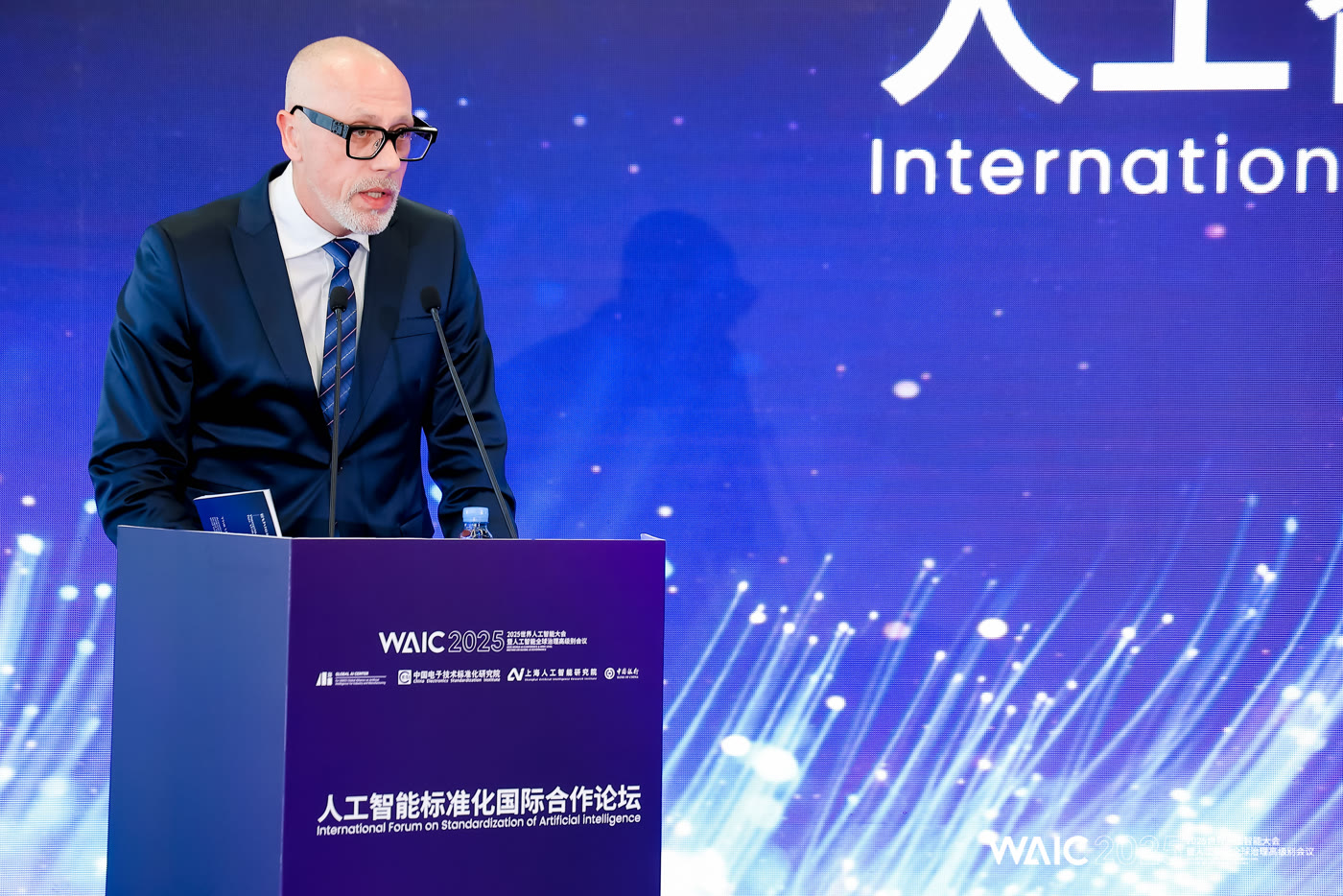
Image context: the cover uses a real photograph from the World AI Conference 2025 in Shanghai. A conference-stage image is the right visual here because this article is about competition for developer attention across the China AI market, not about one vendor's synthetic product art.[7]
What changed in 2026Q1
Qwen is no longer presenting itself as only a model family. The Qwen Code documentation now frames the product as a coding agent surface that runs in the terminal and extends outward into Visual Studio Code, Zed IDE, JetBrains IDEs, GitHub Actions, MCP, LSP, token caching, and sandboxing.[1] That matters because it turns distribution into habit. A provider that reaches the terminal, the IDE, and automation surfaces at once is competing for daily workflow share, not only for benchmark attention.
The commercial signal became sharper in Qwen Code's 2026-03-03 weekly update. Qwen Team said OAuth authentication had been upgraded to qwen3.5-plus and now came with 1,000 free calls per day.[2] That is a meaningful subsidy. A developer who gets that much daily usage through the coding client is being pulled into a behavior loop that looks more like a seat product than a classic pay-as-you-go API account.
Alibaba Cloud's Qwen Code provider documentation pushes the same idea from the infrastructure side. The "Alibaba Cloud Coding Plan" path auto-configures qwen3.5-plus, qwen3-coder-plus, and qwen3-max-2026-01-23 inside the tool, with separate setup flows for China and International regions.[3] In other words, the bundle is not just "here is an endpoint." It is "here is a coding-specific lane with curated models, region-aware onboarding, and lower setup friction."
Zhipu is making a parallel move, but in a more explicit subscription form. Its GLM Coding Plan is described as a coding subscription that works across Claude Code, Kilo Code, Cline, OpenCode, TRAE, CodeBuddy, and OpenClaw.[4] The page also says demand has been high enough that since January 23 at 10:00 UTC+8, new Lite, Pro, and Max inventory has been released daily at 10:00 UTC+8.[4] That is not how an ordinary API page talks. It is how a constrained product tier talks.
The quota design makes the packaging even clearer. Zhipu says the plan refreshes on a 5-hour cycle and a 7-day cycle, with estimated prompt ceilings of roughly 80 / 400 / 1600 prompts per 5 hours and 400 / 2000 / 8000 prompts per week across Lite, Pro, and Max tiers.[4] Its Pro tier includes up to 1,000 monthly calls for the search, webpage, and open-repository MCP tools, while the plan overall is marketed as delivering monthly usable value equal to roughly 15 to 30 times the subscription fee when converted from API pricing.[4] This is seat economics with model compute inside it.
Why this matters above the API layer
The first implication is acquisition. Free or heavily structured usage inside a coding client is more powerful than a generic model card because it reduces the number of steps between curiosity and routine use. Qwen's 1,000 free calls per day and Zhipu's packaged prompt budgets are both ways of moving the first serious developer session away from a bare API bill and into a product wrapper.[2][4]
The second implication is interface capture. Zhipu's Claude Code guide makes the strategy unusually visible: it maps Anthropic-style defaults such as ANTHROPIC_DEFAULT_SONNET_MODEL and ANTHROPIC_DEFAULT_OPUS_MODEL to glm-5-turbo and glm-5, with separate consumption rules for peak and off-peak periods.[5] That is an important commercial move. The provider is not asking developers to abandon an existing tool habit. It is inserting domestic model economics into an already familiar coding client.
The same pattern appears in OpenCode. Zhipu's OpenCode guide says the product runs as a CLI + TUI AI programming agent tool with IDE plugin integration, and that GLM Coding Plan users should target a dedicated coding endpoint at https://open.bigmodel.cn/api/coding/paas/v4 rather than the general API surface.[6] That dedicated endpoint is a clue. When a vendor stands up a coding-specific endpoint, it is treating software-development traffic as its own monetization lane, not as a generic extension of chat completion demand.
This is the part that changes how the market should be read. If distribution sits at the client layer, then raw token pricing stops being the full competitive story. The real contest moves into who can offer the more persuasive package of:
- familiar client compatibility,
- subsidized or smoothed usage,
- curated model defaults,
- built-in tools such as MCP access,
- and fewer setup decisions before useful work begins.[1][3][4][5][6]
That does not erase model quality. It changes where model quality gets converted into revenue. Instead of selling only a model, vendors are trying to sell a working coding seat.
Why this looks like bundling, not just feature expansion
There is a tempting but incomplete reading of these pages that says: providers are merely adding convenience features around their APIs. The stronger reading is that they are building a bundled distribution surface.
Qwen's documentation already spans terminal use, IDE extensions, GitHub Actions, MCP, and configuration layers.[1][3] Zhipu's plan goes further by combining multi-tool compatibility, quota design, dedicated coding endpoints, MCP allowances, and even adjacent benefits such as GLM in Excel (Beta) and the Zhipu AI Input Method inside one subscription context.[4] Once those pieces live under one plan, the product that matters is no longer the isolated model endpoint. The product is the developer workflow bundle.
That bundle has a simple economic purpose. It can lower acquisition cost by subsidizing first usage, raise retention by embedding itself into daily coding routines, and weaken apples-to-apples token comparison because the customer is now evaluating a mixed package of model intelligence, client convenience, and tool access.[2][3][4]
What to watch next
Three things now matter more than another headline benchmark jump.
First, watch whether Qwen keeps the 1,000 daily free calls level or narrows the subsidy once usage normalizes.[2] If it tightens quickly, that will suggest the current phase is mainly customer acquisition. If it holds, Qwen may be signaling a longer-term seat strategy.
Second, watch whether Zhipu's daily inventory release and 5-hour quota regime ease over time.[4] If supply pressure stays visible, the company may still be demand-rich but compute-constrained. If those frictions fade while the tool list keeps expanding, the plan becomes a more credible large-scale distribution layer.
Third, watch whether more providers start shipping coding-specific endpoints, client-level model aliasing, and bundled MCP/tool allowances.[3][5][6] If they do, then the center of gravity in AI-China developer monetization will have shifted decisively above the raw model API.
Bottom line
The clearest commercial read from these 2026Q1 documents is narrower and more useful than "China AI competition is intense." The more actionable conclusion is this: coding subscriptions are becoming the real distribution surface where domestic model providers try to turn model capability into recurring developer habit. The API still matters. It just no longer looks like the whole product.
Sources
- Qwen Team, "Qwen Code" documentation home (terminal, IDE, GitHub Actions, MCP, and tool surface overview).
- Qwen Team, "Qwen Code Weekly: Insight Analytics, Clipboard Images, Terminal Capture" (March 3, 2026; qwen3.5-plus OAuth and 1,000 free calls per day).
- Qwen Team, "Model Providers" documentation for Alibaba Cloud Coding Plan (auto-configured models, region-specific setup, and coding-plan integration).
- 智谱AI开放文档, "GLM Coding Plan 套餐概览" (tool coverage, inventory release timing, quotas, MCP allowances, and subscription framing).
- 智谱AI开放文档, "Claude Code" guide for GLM Coding Plan (Anthropic-style model aliasing and coding-plan usage rules).
- 智谱AI开放文档, "OpenCode" guide for GLM Coding Plan (CLI + TUI positioning, IDE integration, and dedicated coding endpoint).
- Wikimedia Commons, "File: Emmanuel R. Goffi, keynote at the World AI Conference (WAIC) 2025 in Shanghai-1.jpg."