As of 2026-06-16T03:32:36Z UTC, DB-GPT is easiest to misread if it is filed as another text-to-SQL wrapper. The stronger AI-China signal is that the project treats database conversation as only the first step in a larger operating surface: connect the data, let the model write SQL and code, execute inside controlled paths, reuse domain skills, and turn the result into reports or data applications.[1]
That distinction matters because the first generation of database chat demos taught the wrong habit. They made the product look like a prompt box: ask a question, receive a query, maybe see a chart. In real enterprise use, the hard part starts after the query appears. Someone has to know which database is in scope, whether the schema is current, whether the SQL is safe to run, whether Python analysis is allowed, whether outputs are reproducible, and whether a useful result can become a repeatable workflow rather than a one-off answer.
DB-GPT's public repository points directly at that broader shape. It describes an open-source agentic AI data assistant that connects to databases, CSV and Excel files, warehouses, and knowledge bases; lets users ask in natural language while AI writes SQL autonomously; runs Python and code-driven analysis; loads reusable skills; generates charts, dashboards, HTML reports, summaries, and action-oriented outputs; and executes tasks in sandboxed environments.[1] The project is therefore not only asking "can the model translate English to SQL?" It is asking whether data analysis can become an agentic application layer.
The control plane sits around the query
The useful unit in DB-GPT is not the generated SQL string. It is the controlled path around that string. The README's product workflow is revealing: explore data, plan and execute, use skills, and generate reports.[1] That sequence sounds plain, but it changes the product boundary. A query generator is a component. A data assistant has to manage inputs, execution, tools, and artifacts as one loop.
The data-app development guide makes this more concrete. Its sample data-analysis app is built as a DB-GPT application rather than as a loose prompt recipe: it uses a declarative app file, defines metadata, specifies team and resource configuration, and wires the application into DB-GPT's agent and resource model.[2] That is the part many text-to-SQL discussions skip. Once a workflow is packaged as an app, the important questions become operational: what resources does it need, which agent role owns the task, what data source is attached, and how does the result return to the user?
This is why DB-GPT belongs in the AI-China shelf even when it is open source and internationally usable. China's model field is crowded with endpoint, benchmark, and agent announcements. The more durable signal is often one layer down, where open projects turn local enterprise constraints into reusable infrastructure. DB-GPT's center of gravity is exactly there: make the database, file, RAG, code, and report layers legible enough that data work can be productized instead of repeatedly improvised.[1][2]
AWEL is the workflow clue
AWEL, the Agentic Workflow Expression Language, is the strongest clue that DB-GPT is trying to standardize data-agent orchestration rather than only expose a chat UI. The AWEL documentation frames it as an intelligent-agent workflow orchestration system with resources, operators, and triggers.[3] In practical terms, that means the workflow is not hidden inside a long prompt. It is expressed as a graph of steps with named inputs, operators, and runtime behavior.
That matters for enterprise data work because repeatability is the difference between a useful demo and an internal tool. A manager asking "why did revenue drop in this region?" may accept a conversational answer once. A finance, operations, or compliance team needs the same route to be runnable again with different dates, tables, or filters. AWEL gives DB-GPT a way to treat that route as a workflow object: databases and model calls can sit beside custom operators, triggers, and output steps rather than being buried in conversational state.[3]
The result is not magic autonomy. It is a more inspectable contract. The model may still make bad assumptions, select the wrong table, or write a fragile query. But when the analysis sits inside an app and workflow structure, teams have places to intervene: constrain resources, add validation, swap an operator, pin a model provider, or convert a repeated analyst move into a skill. That is a better direction than asking every user to trust an opaque model turn.
The older paper still explains the strategic bet
The DB-GPT paper is useful because it shows the project's original ambition before the current assistant packaging became more polished. It presented DB-GPT as a framework for improving database interaction with private large language models, Text-to-SQL, retrieval-augmented generation, adaptive learning, a service-oriented multi-model framework, and data-driven agents.[4] Some of that language belongs to the 2023-2024 moment, but the strategic bet has aged well: database AI is not only a translation problem. It is a privacy, orchestration, evaluation, and application problem.
That point is sharper in China than in a generic global AI-tools market. Many organizations want AI over internal data but cannot casually ship every schema, spreadsheet, or knowledge base through a foreign hosted model. Public Chinese AI stacks therefore keep circling the same product pressure: bring model capability close to data while preserving enough local control over deployment, connectors, access, and execution. DB-GPT's support for local and hosted model profiles, OpenAI-compatible paths, DashScope/Tongyi support, RAG document parsing, and vector-store defaults is one expression of that pressure.[1]
The project also makes the model-provider layer deliberately replaceable. Its quick-start examples include profiles for OpenAI, Kimi via Moonshot API, and MiniMax via OpenAI-compatible API, while the installation notes describe local framework pieces and multiple model families for Text2SQL fine-tuning, including Baichuan, InternLM, Qwen, XVERSE, and ChatGLM2.[1] That does not prove every path is equally mature. It does show the product philosophy: the data-app layer should not be hard-coded to one model vendor.
The boundary is trust, not feature count
The main risk is overreading the feature list. A tool that can connect to databases, write SQL, run code, and generate reports can also create a large blast radius when permissions, schema grounding, or execution controls are weak. DB-GPT's sandbox and workflow language are therefore not decorative. They are central to whether this class of product can be adopted safely.[1][3]
For engineering teams, the right evaluation is practical. Can the app restrict which data sources are available? Can generated SQL be reviewed or constrained before execution? Are Python runs isolated enough for the organization's risk model? Can a repeated workflow be tested against known questions? Can outputs cite tables, queries, or intermediate artifacts clearly enough that an analyst can debug the answer? Those questions matter more than whether the first demo produces a pleasant chart.
The best reading of DB-GPT is consequently narrow but important. It is not proof that text-to-SQL is solved. It is evidence that China's open AI-data tooling is moving away from prompt-box demos toward data-app control planes. In that shift, SQL generation becomes one operator among many: connectors, RAG, skills, workflow graphs, model routing, sandboxed execution, and report artifacts all become part of the product.
That is where the durable signal sits. If database AI remains a chat feature, it will keep failing at the point where real data work begins: permissions, repeatability, validation, and handoff. If it becomes an app-and-workflow layer, it has a chance to fit the way organizations actually use data. DB-GPT is interesting because it is building on the second assumption.
Sources
- eosphoros-ai,
DB-GPTGitHub repository - official README, project scope, assistant workflow, connectors, SQL/code execution, skills, sandboxing, installation profiles, and model-family notes. - DB-GPT documentation source, "Data App Develop Guide" - official app-development guide showing DB-GPT application packaging, metadata, resource configuration, and agent setup.
- DB-GPT documentation source, "AWEL" - official workflow-orchestration documentation for resources, operators, triggers, and agentic workflow structure.
- Siqiao Xue et al., "DB-GPT: Empowering Database Interactions with Private Large Language Models," arXiv:2312.17449 - paper describing Text-to-SQL, RAG, SMMF, private LLM framing, and data-driven agents.
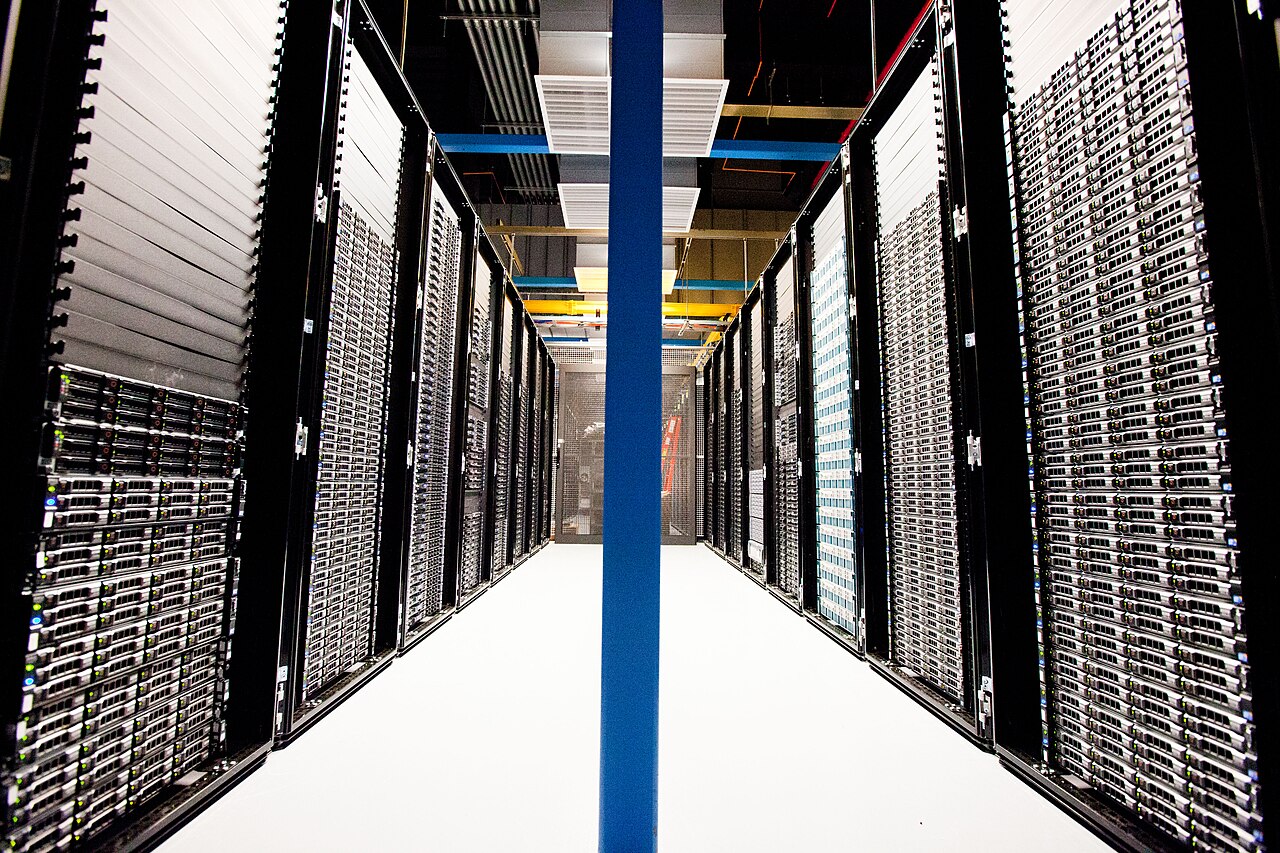
- Wikimedia Commons, "File:Wikimedia Servers-0051 17.jpg" - real photographic cover image, server-rack photograph captured July 16, 2012, with file metadata and licensing page.