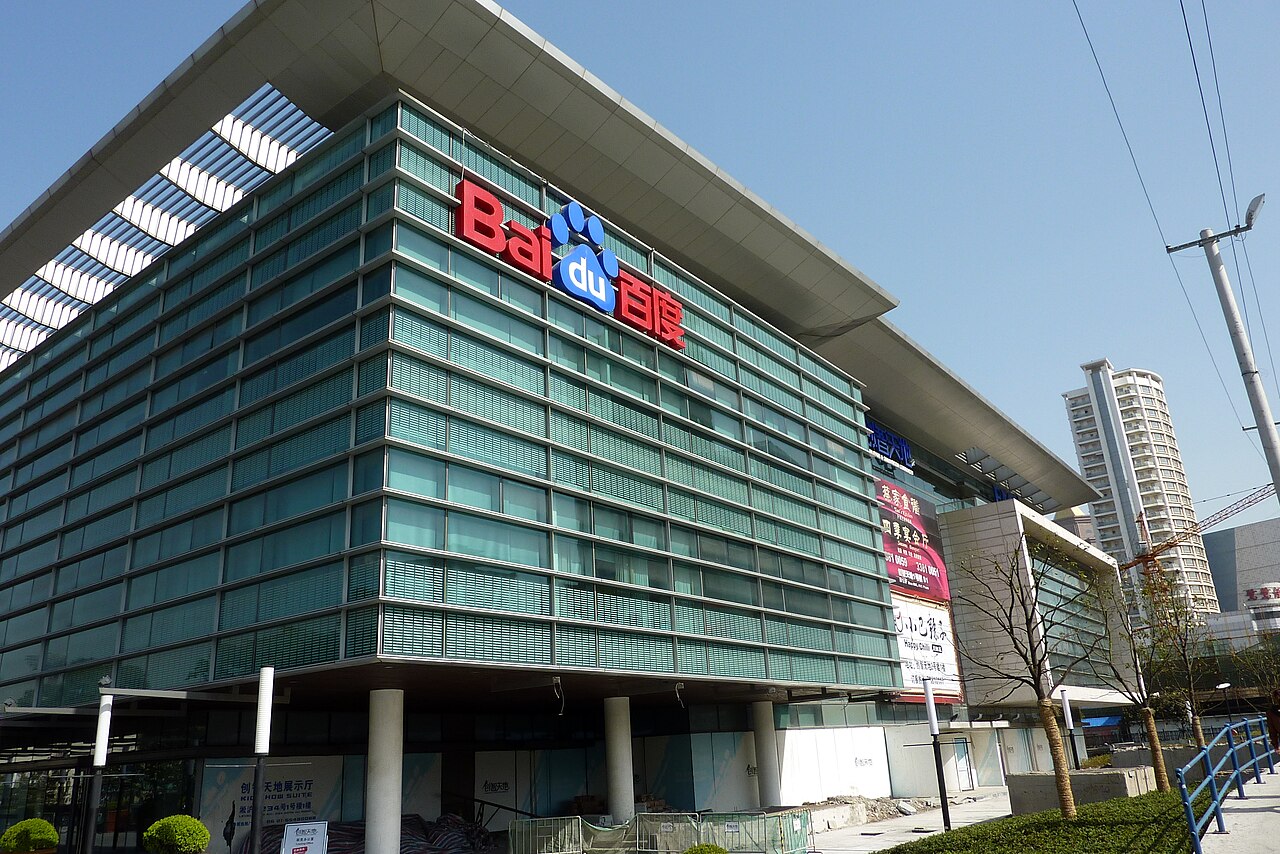
As of 2026-05-31 UTC, the most useful way to read BaiduWiki is not as a simple "China builds a Wikipedia challenger" headline. The sharper ai-china signal is that Baidu is trying to convert an existing Chinese knowledge asset into an international AI product: start with Baidu Baike's large domestic corpus, select entries that travel well, translate them with multiple AI agents, wrap them in multimedia and relationship features, then place the result beside Baidu's search and assistant surfaces.[1][2]
That is a different use case from the usual model-release race. BaiduWiki does not ask whether one ERNIE model beats another benchmark. It asks whether AI can turn a search-era knowledge base into a cross-language distribution layer. If it works, the value is not only that an English, French, Spanish, Russian, or Japanese reader can open a page. The value is that Baidu gets a reusable pipeline for turning Chinese institutional memory, cultural entries, people records, scenic-place descriptions, and explanatory pages into international surfaces that can be found, summarized, linked, and reused by assistants.
The launch details are compact but revealing. South China Morning Post reported on February 12, 2026 that BaiduWiki had gone live that week in English, Spanish, French, Russian, and Japanese, with a now-deleted Baidu social post describing roughly 1 million entries translated with the help of multiple AI agents.[1] IT之家's Chinese report on February 10, 2026 gave the same five-language lineup, said BaiduWiki selected content from Baidu Baike's strongest Chinese entries, and described support for video, text-and-image presentation, and person-relationship features.[2]
Those facts make the product more interesting than a translated website. Baidu is not merely offering a machine-translated mirror. It is trying to turn a corpus into a structured international knowledge service.
The Corpus Is The Product
Baidu Baike is the asset underneath the move. SCMP noted that Baidu had built Baidu Baike into one of the largest encyclopedia-like services, with more than 30 million entries as of January 2026.[1] IT之家 added a fuller company-side framing: Baidu Baike had exceeded 30 million total entries, accumulated more than 8.03 million contributing users, and worked through its "Fanxing Plan" with institutions including the University of Chinese Academy of Sciences, Chinese Academy of Sciences institutes, and Peking University, alongside 100,000 experts and professional creators, to build more than 1 million professional-knowledge entries.[2]
That matters because translation quality is only half of the problem. The other half is selection. A multilingual encyclopedia built from a domestic corpus has to decide which entries are useful outside the original language environment, how much context to add, and where to preserve local specificity instead of flattening everything into generic global prose. The most valuable BaiduWiki page is not necessarily the broad topic that already has a polished Wikipedia article. It may be a Chinese person, place, institution, opera role, historical site, food term, filmography, scenic-area entry, or technical term where Baidu Baike has more local density than the global web.
In that sense, BaiduWiki's strongest possible use case is not replacing Wikipedia. It is filling the export gap around China-specific knowledge. An assistant answering a travel, culture, business, or biographical query can only be as good as the context it can retrieve. If BaiduWiki gives Baidu an indexed, multilingual, China-centered reference layer, then the product becomes more than a destination site. It becomes a retrieval substrate.
AI Agents Change The Cost Curve
The agent detail is easy to skip, but it is the operational point. IT之家 reported that BaiduWiki uses multiple AI agent models for multilingual translation.[2] SCMP likewise reported the AI-agent translation framing from Baidu's deleted X post.[1] My inference from those reports is that Baidu is not treating translation as one batch job. It is likely treating encyclopedia expansion as a repeatable workflow: select entry, translate, adapt, attach media or relationships, run quality checks, publish, and update.
That workflow changes the cost curve. Traditional multilingual encyclopedia work is slow because every language version needs contributors, reviewers, citation habits, editorial norms, and maintenance. AI does not remove those requirements, but it lowers the cost of producing first drafts at scale. BaiduWiki's question is whether the quality-control layer can keep up with the generation layer.
This is where the product becomes an AI-China signal. Chinese AI companies are increasingly using agents not only to chat, code, or browse, but to operate content pipelines. BaiduWiki is a visible example: the output is a public knowledge product, but the important system is behind it. The company is testing whether agentic translation can turn an old search-and-encyclopedia asset into a global-facing service quickly enough to matter.
Search Gives It A Second Surface
The launch also sits inside Baidu's broader shift from legacy search toward AI-powered surfaces. SCMP reported that Baidu introduced a "global search" feature for Ernie Assistant around the same time, giving more than 200 million monthly active users access to information such as global destinations and scenic spots.[1] Baidu's first-quarter 2026 results give the strategic context: the company said Baidu Core AI-powered Business exceeded half of Baidu General Business revenue for the first time, AI Cloud Infra revenue reached RMB 8.8 billion in Q1 2026, and Baidu App reached 655 million MAUs in March 2026.[3]
BaiduWiki therefore should not be read as a lonely content site. It belongs to a distribution stack. The same company has a search app with enormous traffic, AI assistants, cloud infrastructure, agent products, and a domestic knowledge base. A multilingual encyclopedia can feed all of those surfaces. It can help global users find China-specific pages, and it can help Chinese users or Baidu assistants retrieve internationally framed explanations.
That dual direction is the real product thesis. BaiduWiki can export Chinese knowledge outward while Baidu's global-search work imports international knowledge inward. The bridge is not just language; it is structured retrieval.
Trust Is The Boundary
The hard part is trust. A million AI-translated entries can create reach faster than credibility. Readers need to know where an entry came from, whether it was translated by machine, whether a human reviewed it, when it was last updated, what sources support it, and whether sensitive or contested topics follow clear editorial rules. Without that provenance, BaiduWiki risks being seen as a glossy translation layer rather than a dependable reference layer.
The risk is especially sharp because encyclopedia trust is cumulative. A reader may forgive one awkward sentence, but not opaque sourcing. A travel entry can be useful with modest prose. A medical, legal, political, or biographical entry needs stronger attribution and correction mechanisms. If BaiduWiki wants to become a source for assistants, not only humans, the provenance problem becomes even more important: assistant retrieval can amplify weak entries quickly.
The near-term watch items are clear. First, does BaiduWiki expose source trails from Baidu Baike to translated page to update history? Second, does it show human review or expert involvement for high-stakes entries? Third, does the relationship-graph feature improve navigation, or does it create confident-looking associations without enough sourcing? Fourth, does Baidu connect BaiduWiki into assistant answers with visible citations, or does the knowledge layer disappear behind generated prose?
The falsifier is equally clear. If BaiduWiki remains mostly a large translated shell with thin provenance, limited edit transparency, and uneven maintenance, then it will be useful as a discovery layer but weak as a reference authority. The stronger proof would be boring and operational: stable URLs, visible citations, revision history, review labels, reliable multilingual updates, and assistant answers that point readers back to inspectable pages.
BaiduWiki matters because it puts a concrete use case around a phrase that is otherwise too vague: AI-powered knowledge globalization. The product is not just an encyclopedia. It is a test of whether a Chinese AI company can take a domestic knowledge base, use agents to translate and structure it, attach it to search and assistant distribution, and still preserve enough provenance for readers to trust the result.
Sources
- Ben Jiang, "China's Baidu unveils AI-driven Wikipedia challenger in bid for international users," South China Morning Post (February 12, 2026; launch timing, five-language availability, 1 million entries, AI-agent translation note, Baidu Baike scale, and Ernie Assistant global-search context).
- IT之家, "百度百科推出国际版 BaiduWiki,首批支持五大语种" (February 10, 2026; Chinese-language launch report covering five supported languages, AI-agent translation, video/text/person-relationship features, 1 million entries, Baidu Baike scale, contributor count, and expert-content program).
- Baidu, "Baidu Announces First Quarter 2026 Results" (May 18, 2026; AI-powered business revenue context, AI Cloud Infra revenue, AI Applications highlights, and Baidu App MAU figure).
- Wikimedia Commons, "File:Baidu office at Shanghai Yangpu Knowledge & Innovation Community.jpg" (real 2010 Baidu office photograph by simone.brunozzi, used as the article image).