
As of 2026-03-27 UTC, the most useful way to watch Baidu's official "New ERNIE Model Launch" stream is to ignore the temptation to treat it as one more frontier-model keynote.[1] The event, published on November 13, 2025, is doing something narrower and more operational: it lays out a delivery ladder that connects flagship model branding, agent tooling, API access, and open-weight spillover into one developer-facing story.[1]
That matters because Baidu's public AI surface had already been moving in that direction for months. In March 2025, Baidu introduced ERNIE 4.5 and the reasoning model ERNIE X1, pairing capability claims with explicit API pricing and earlier-than-planned free access for ERNIE Bot users.[6] By January 2026, Baidu's Qianfan community positioned ERNIE 5.0 formal release as a lower-cost, faster production lane while continuing to stress developer availability and ecosystem reach.[2] The video sits between those two points: it explains how Baidu wants developers to understand the bridge from the 4.5/X1 cycle to the 5.0 era.[1][2]
The key inference from the stream is straightforward: Baidu is not selling "the best model" as a standalone object. It is selling a sequence. The sequence runs from multimodal flagship claims, to reasoning variants built on the same base, to agent and tool protocols, to an API surface that lowers switching friction, and then outward into open-source community adoption.[1][3][4][5] That is the frame worth holding before pressing play.
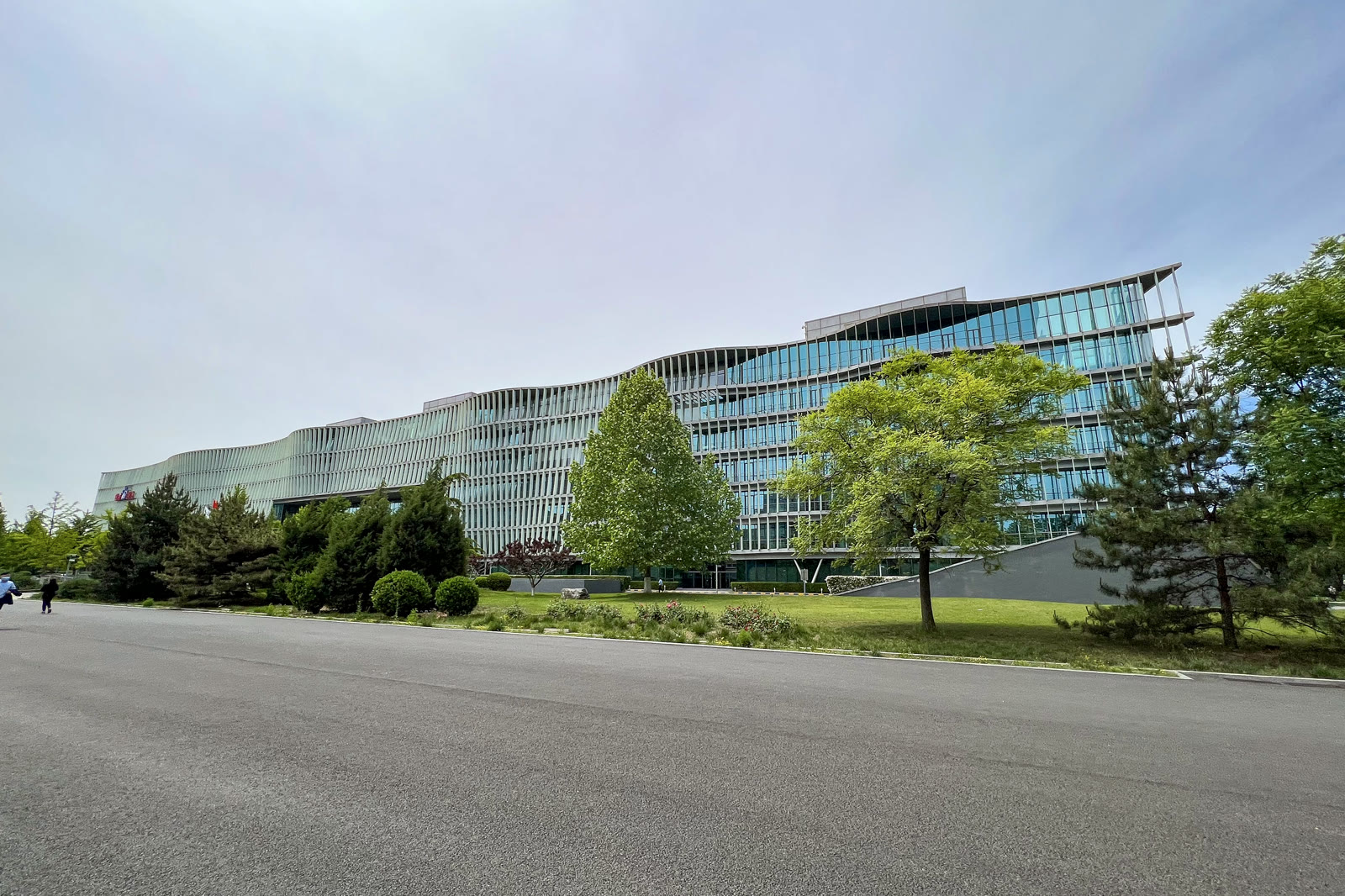
Image context: the cover uses a real photograph of Baidu's Shangdi headquarters from Wikimedia Commons. A company-site photograph is the right visual here because the article is about institutional delivery structure, not a synthetic rendering of model internals.[7]
The first signal is audience: this is a developer event before it is a consumer ad
Around the 8:20 mark, the hosts make the framing unusually explicit. They introduce the event at BU World 2025, unveil the "brand new flagship model" to the "global developer community," and keep returning to developer adoption as the unit that matters.[1] That choice is more revealing than the usual launch adjectives. Baidu is telling viewers that ERNIE 5 should be read inside a production ecosystem, not only inside a benchmark race.
That matches the written rollout. The January 2026 Qianfan post on the ERNIE 5.0 formal release is structured less like a pure research announcement than like a commercialization note: lower prices, faster throughput, and formal platform availability are part of the headline value proposition.[2] In other words, the stream's target audience is not accidental. Baidu wants the flagship reveal and the serving surface to feel like one conversation.
This is also where the video diverges from a simpler "China model competition" narrative. In outside reporting, Baidu's March 2025 launch appeared as one more move in a fast-moving domestic model race.[6] Inside the company's own launch rhetoric, the emphasis is different. The event repeatedly tries to collapse research credibility and developer usability into the same object. That is a strategic choice about who Baidu thinks still needs to be persuaded.
Around 9:30, the multimodal claim immediately turns into an efficiency claim
The technical section beginning around 9:30 is the most useful part of the stream.[1] The presenter describes ERNIE 5 as operating in a unified space that enables collaborative reasoning across modalities, then quickly moves to the payoff terms Baidu actually cares about: long-form video reasoning, complex document understanding, multimodal conversation, lower training cost, and lower inference cost.[1] The sequence matters. Multimodality is introduced, but it is not left as a prestige label. It is translated into tasks and then into economics.
One line is especially revealing: the presentation says ERNIE 5 uses a mixture-of-experts design with an activation ratio under 3%, pairing scale with efficiency rather than treating size as a goal on its own.[1] That claim should be read together with the written Qianfan release, which foregrounds lower prices and faster serving in its 5.0 production messaging.[2] The combined message is that Baidu wants the market to stop reading multimodality as expensive ornament and start reading it as a serving architecture that can still fit production constraints.
This is where the launch video becomes more interesting than a generic promo reel. It is not only saying "our model can do more." It is saying "our model can do more in a way that stays economically legible." For U.S. builders watching China-model competition, that is the operational signal worth keeping. Capability headlines are abundant. A vendor telling developers how capability, activation ratio, and inference cost fit together is a more durable clue about how it plans to win workloads.[1][2]
The core reveal comes near 25:20: Baidu wants ERNIE to sit inside agent protocols and existing app stacks
The sharpest turn in the whole stream arrives around 25:20, when the presenters stop talking about model quality in the abstract and start talking about workflow completion.[1] The demo summary describes an agent that understands a coding task, validates the change, and opens a pull request autonomously; then the presenter says ERNIE 5 provides support for MCP and other tool-calling protocols.[1] A minute later, the stream adds that the API is open for integration into apps and workflows for global users.[1]
That section matters because it converts ERNIE from a model family into a control-plane candidate. Baidu's written product surface backs up the same direction. Its OpenAI-compatible documentation centers migration through familiar ingredients such as API key, base_url, and model selection rather than requiring a new mental model from scratch.[4] Its Qianfan product documentation places Agent engine, tools and MCP, model service, and enterprise services inside one stack diagram.[5] Put together with the video, the message is not subtle: Baidu wants ERNIE to be judged by how cleanly it can plug into existing orchestration habits.
This is the strongest reason to watch the video now rather than when it first appeared. In launch week, "supports MCP" can sound like one more feature bullet. After a year in which agent frameworks and OpenAI-compatible routing became default expectations, the line reads differently.[4][5] It tells you that Baidu understands the current competitive boundary. The fight is no longer only over raw reasoning or multimodal quality. It is over whether a model can enter tool-using production systems without imposing a new integration tax.
The closing bridge is the real thesis: ERNIE 5, X1.1, and open weights are presented as one ladder
The final third of the stream is where the delivery story becomes impossible to miss. Around 26:30, the presenters introduce ERNIE X1.1 as a reasoning model built on the 4.5 base, emphasize end-to-end reinforcement learning, and claim lower hallucination plus better instruction following for agents and tools.[1] That alone would already make the video more than a flagship launch. It positions reasoning not as a separate brand universe, but as an extension built from the same foundational lane.
Then, beginning around 27:15 and intensifying around 28:30, the event pivots into the ERNIE 4.5 open-source series, community feedback around the 21B model, and the opening of ERNIE 4.5 VL 28B A3B Thinking with stronger cross-modal reasoning and "thinking with image."[1] Baidu's August 2025 community post on the 4.5 open-source family uses the same logic in writing: open release is not treated as charity or side hobby, but as a way to widen the developer funnel around the ERNIE stack.[3]
This is the part of the launch that deserves the closest attention on rewatch. Most model events force viewers to pick one headline object: the flagship, the reasoning model, or the open release. Baidu instead tries to make the viewer see a ladder. The flagship establishes top-end credibility. X1.1 extends the same base into reasoning-heavy work. The open 4.5 family broadens community adoption and experimentation. Qianfan then offers the compatibility and agent surfaces that can turn that interest into deployment.[1][2][3][4][5]
That structure is why this video still matters in March 2026. It is not the freshest launch in the market, and it is not the most concise. But it is unusually clear about Baidu's intended conversion path from research identity to developer habit. If you want one question to carry into a rewatch, use this one: at each moment in the stream, is Baidu describing a model, or is it describing a route into the rest of its stack? Most of the time, the answer is the second.
What to watch for if you replay it now
Watch for how often the event shifts from capabilities to interfaces. When ERNIE 5 is introduced, listen for the immediate move from multimodality to cost and latency. When agent capability is mentioned, notice that the language quickly turns to MCP, tool calling, and integration. When X1.1 appears, pay attention to the insistence that it grows out of the 4.5 base. When open source arrives, notice that community adoption is framed as part of the same continuum rather than as a separate generosity play.[1][2][3][4][5]
That is the durable read from Baidu's own material. The company is asking developers to see ERNIE not as one model to compare on a chart, but as a stack with multiple entry points that still resolves back into one delivery system. Whether that strategy wins is still open. The video's value is that it tells you, in Baidu's own sequencing, what game it believes it is playing.
Sources
- Baidu Inc., "New ERNIE Model Launch," official YouTube event video, published November 13, 2025.
- 百度智能云千帆社区, "文心5.0正式版:速度更快,价格更低,推理成本仅为 DeepSeek R1 的 40%."
- 百度智能云千帆社区, "文心大模型4.5系列正式开源,旗舰版价格低至0.4元/百万tokens."
- 百度智能云千帆文档, "OpenAI SDK兼容介绍" (V2 compatibility and migration path).
- 百度智能云文档, "千帆 ModelBuilder 产品文档" (agent engine, tools and MCP, model services).
- Reuters, "China's Baidu launches two new AI models as industry competition heats up" (March 16, 2025).
- Wikimedia Commons, "File:Baidu headquarters at Shangdi (20220509111808).jpg."